Showing posts with label Shakespeare. Show all posts

Thursday, January 22, 2015

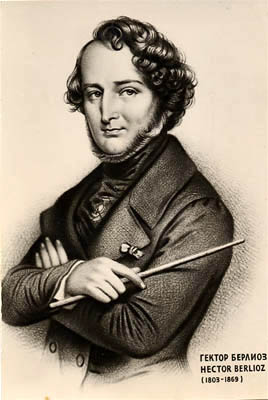
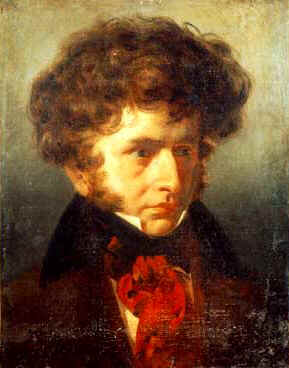
Hector Berlioz:France's Romantic Composer - Part 3


Time of Productivity


           Hector Berlioz is now at the peak of his musical career in Paris. In 1830, Berlioz began and finished his Symphony Fantastique, which brought him  much fame and notoriety. Even today, many people think of this piece when they think of Berlioz. Berlioz was greatly inspired after he attended The Tempest by Shakespeare so much that he even composed an overture dedicated to Shakespeare which he called La Tempete. Berlioz also had the privilege of meeting Franz List, which resulted in the formation of a long and lasting friendship between the great composers.

          In 1832 Berlioz meets Harriet Smithson and marries her a year later, however he did not treasure their marriage and separated from his wife 10 years later. During these years he wrote some of his most popular works such as the symphony Harold en Italie (1834) and the choral work Requiem, also known as the Grande messe des morts (1837). During this same time, one of his operas, Benvenuto Cellini (1838) flopped and was never played again during his lifetime. This caused a great setback in his career. During this period he often had to resort to his job as a music critic to earn a steady income. There were bright spots during this time as well. In 1838, Niccolo Paganini hears Berlioz's Harold en Italie gives him a large financial gift which enabled him to write the choral symphony Romeo et Juliet (1839), dedicated to Paganini.

          Throughout the 1840’s Berlioz traveled throughout Europe working as a conductor to pay for his travels. When his choral work La Damnation de Faust became a financial sinkhole touring came to the rescue. Finally, Berlioz found his financial footing in 1850’s, when his L’Enfance du Christ (1854) was a success and he was elected to the Institute de France allowing him to receive another stipend!  During this time he also wrote 2 more operas which both had successful debuts.

Check out Part 4 Next week!
Guest Contributer: Piano Book 1 Student

Tuesday, January 13, 2015

Hector Berlioz: France's Romantic Composer - Part 2

Life as a Student

http://www.hberlioz.com/Photos/hb6.jpg          In Part 1 of this biography, we looked at the early life and musical experience of Hector Berlioz. Hector was expected to follow in the footsteps of his father and become a physician, however his passion for music took Berlioz in a different direction.

The Early Years
 
          In 1823, Hector Berlioz worked as a critic for the journal Le Corsaire in Paris and also composed his first big works, many of which are lost or destroyed by Berlioz himself. The Messe Solennelle (1824), Les Francs-Juges (1826), and the Waverley Overture (1827) are a few of his early compositions he failed to destroy so we can enjoy. His early works were not widely accepted at the time and ended in him failing to win the coveted Prix de Rome, a scholarship for arts students; though he tried again and again, submitting a new cantata each year. All of Berlioz's new works resulted in bad performances, but even with losing and failing so many times, Berlioz was still persistent and pushed himself to work hard. And in 1828, on his fourth attempt, Berlioz won second place in the Prix de Rome! This prize included a five year pension, which was badly needed for the struggling composer. 

          Berlioz was a lover and a learner, which was never so apparent then during these early years. During his long apprenticeship in Paris, Berlioz had exposure to great composers, like Ludwig van Beethoven and Carl Maria von Weber, and great poets like William Shakespeare and Johann Wolfgang von Goethe. Seeing the plays of Shakespeare motivated Berlioz to learn English, so he could read Shakespeare in the original. But Berlioz did not stop there. In 1827, Berlioz started singing in the chorus at Theatre des Nouveautes to grow his income. He was a great lover of the opera, which led Berlioz to begin writing musical criticism. This job helped him earn more money and support himself, while pursuing his passion for music and the arts.

Check out Part 3 Next week!

Guest Contributer: Piano Book 1 Student