Wednesday, August 7, 2013

Simplifying Relationships With Children

     I love working with children, don't you? There are times, though, when children are resistant to doing what they are supposed to do, but why? This is something that I am learning to deal with as a teacher, so I am always trying to relate to and teach children in a better way. Here is a key principle that I have learned and read about:

Giving children practice with the fact that life sometimes makes demands doesn't make adults mean. Much of growing up is learning to tolerate the demands that life itself makes on us. . When adults are  uncomfortable with taking control, they can confuse children by softening and blurring - and, thereby weakening - their demands. For example, while some children are ready to go when a parent or teacher says "Would it be o.k. if we do some [violin] bow exercises now?" other children hear it as a what it really is - a choice. They say "No," either verbally or by the way they react, and with good reason. The younger they are, the more children thrive on instructions and choices that are clear, concrete, and genuine - and demands that are straightforward. In other words, in this case, saying "Bow exercises are next." Young children need this clarity because they are not yet able to handle subtleties of language. But it's even good advice for adolescents. No matter what age the developing child, adults serve that child best when they are clear and up-front.[1]
                                                                               
     Notice that the key principle is clarifying reasonable demands from choices when trying to accomplish a task with a child (or even adult). Do this keeping in mind that people "of any age are human beings who deserve to be treated fairly with the care, concern, and courtesy you would normally use in any relationship."[2] Our desires to teat people fairly with care, concern and courtesy flows out of a convicting that people are very precious. Do you really believe that? Why do you believe this? These questions will determine how you will treat people, how you will relate to them, and how you will teach them. 

     Let me be honest, I am still learning how to do this consistently, it is an ongoing process. Giving clear demands is not some new discovery, this principle has been known for thousands of years. This has helped me that at times I make things more difficult for the children that I teach. So, do not give up working with your children, simplify things by being clear with what they need to do. They may not like it, but they need it to grow up to mature human beings.  


[1]Edmund Sprunger, Helping Parents Practice (St. Louis: Yes Publishing, 2005), p. 94.
[2]Barbara A. Brinson, Choral Music: Methods and Materials .

Monday, July 8, 2013

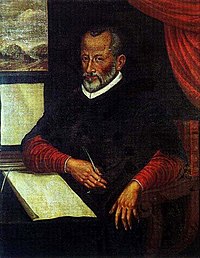
Giovanni Pierluigi da Palestrina


Historical Period: Renaissance
Nationality: Italian
Born: Palestrina, Italy; 3 February 1525 A.D.
Died: Rome, Italy; 2 February 1594 A.D.
Family: Lucrezia and three sons: Rudolfo, Angelo, Iginio.
Specialist Genres: Church (sacred) music.
Major Works: 140 madrigals, 104 masses,
and 250 motets.

     It is the 1500s, when Leonardo Da Vinici created his masterworks, William Shakespeare composed his plays and sonnets, Italy and France fought one another, the Ottomans fought the Shiites, and Martin Luther wrote his famous 95 Theses to bring change in the Catholic Church, music was flourishing.  Around this time, sacred music, music written to be sung in church services, was written mostly by composers in France, Spain and Portugal (the Low Countries). Giovanni Pierluigi from Palestrina, Italy, started composing sacred music and was one of the first from his country to be influential in sacred music. He became so famous that people just call him Palestrina, by the name of the city he was from. His music was very polyphonic, which means that the song has many melodies  going at the same time and harmonize beautifully. Giovanni was very disciplined to keep to his own style, which is described as smooth, flowing and leads you to spend time thinking about the words of the song. It is incredible to think what a man from a small town can do when he works hard and does not give up!


         Giovanni Pierluigi was born on February 3rd, 1525 A.D.,  but there is not much about his early years. We know that his family moved to Rome, Italy in 1537 A.D.  and while there the choirmaster of Santa Maria Maggiore church heard him singing one day, the choirmaster liked it so much that he started giving Giovanni musical training. As Palestrina grew up, he learned to play the organ and was given a job as the organist at St. Agapito and also taught music lessons from 1544-1551. He then became the maestro di cappella in St. Peter's papal choir. This choir sang at the church where the Pope of the Catholic church would go. 
      In 1547, Palestrina had the great joy of marrying  Lucrezia Gori. They had three sons together, Angelo, Rudolfo and Iginio. There was a lot of happiness in the family when the children were born and Giovanni kept writing music.
      Giovanni published his first book of Masses before he was 30 years old. Masses are songs for the church service of the Catholic Church. When Pope Julius III heard these beautiful songs that Giovanni composed he was so impressed that he offered him the position of music director of the Julian Chapel. These songs that he wrote for the church services were sung by a men's choir with no instruments, which is very different from a lot of the music that we listen to today. 
      Giovanni was the director of music at other churches as well and we know that he was picky about the kind of job he worked. In 1568, Giovanni was offered the job as choirmaster for the imperial court in Vienna, so he would be working for the emperor. But Giovanni did not take the job because he did not like what the job was all about. He wrote many other pieces of music, such as motets, hymns, offerories, and lamentations. 
      Among all the success and happiness, Palestrina also experienced great loss when his wife and two of his sons died in the Plague by 1580. Iginio, his son, was the only one in the family to survive the Plague with Palestrina. It was because of these painful experiences that Giovanni considered becoming a priest of the church. A priest is a man that gives up his life to serve in the Catholic church, so does not own anything and will not get married because he has dedicated himself completely for Jesus Christ. But Palestrina did not do it, in 1581 he married a widow, a woman whose husband died. 
      Palestrina left this earth leaving behind a lasting influence on the development of church music, his work being seen as the culmination of Renaissance polyphony. What are you working on?


Saturday, July 6, 2013

Alfred Level 1B, No. 1: Step Right Up


Focus Points:

  • Make sure both hands are in C position: the right thumb on C and the left thumb on C.
  • The goal is to play each hand smoothly, so that there are no fumbles or slips. So play each hand a few times.
  • Then play both hands together at the same time.
  • Try both hands in different positions so that you get comfortable playing in different parts of the piano.
  • Play the piece slow, medium and fast tempo.
  • Play through making some changes to how long certain notes will, that is, improvise!

Monday, June 24, 2013

Suzuki Cello Book 1, No. 1: Twinkle Variation A


Focus Points:
  • Get into a good playing position every time, do not just let something slip.
  • Put your bow on the D string.
  • Start thinking of the rhythm: "pepperoni pizza" or "mississippi stop stop" or "1-e-and-a 2-and"
     however you think about it, go for a consistent rhythm on each note. 
  • Stay relaxed and enjoy!

Thursday, June 6, 2013

Bastien Piano Basics Level 1, No. 3: Sleepy John


Focus Points:
  • Make sure you are in C position with both hands: right hand thumb on C and left hand pinky on C.
  • This is the first time in the book that the left hand starts
  • At the end of the piece, in the last two measures, the right and left hand alternate. Make sure that you do not skip the double C in the right hand.
  • Try playing every note in the song with "pepperoni pizza" like in the finger concerto.
  • Play the p (piano) really soft and the f (forte) really strong to make a dramatic difference.

Monday, June 3, 2013

Frederic Chopin: Virtuoso Piano Player and Composer

Portrait of adult Chopin

"This exquisite, lofty and eminently aristocratic celebrity remains unattacked. A complete silence of criticism already reigns about him, as if posterity already had come." ~Franz Liszt

Historical Period: Romantic
Nationality: Polish
Born: Zelazowa Wola (near Warsaw), Poland in 1810 A.D.
Died: Paris, France in 1849 A.D.
Family: French dad, Polish mother, 3 older sisters
Married: No, but he tried.
Specialist Genres: solo piano music
Major Works: 4 ballades; 27 etudes; 56 mazurkas; 19 nocturnes; 2 piano concertos; 25 preludes; 4 scherzos; 3 sonatas; 44 waltzes. 

Summary         
     Frederic Fracois Chopin (Polish spelling: Fryderyk Fraciszek Szopen) started writing music from when he was 6 and started learning to play the piano even earlier. He is famous for writing a lot of beautiful, passionate, fun, and really hard music for the piano. Some of the songs that he made up are called mazurkas and polonaises. These kinds of songs for the piano are from dances in his country Poland. This shows how much he really loved his country. Do you really like your country? Try composing a song to show your appreciation. Other composers learned from Chopin, like Claude Debussy and Robert Schumann


        At around 20 years old, Chopin left Poland to visit and work in other cities of Europe. But, before he left Poland, Chopin took a little bit of dirt and put it in a tiny box to take with him wherever he went. 

Chopin never really liked to play for big crowds; he rarely did it. One time, Chopin went to England and play a recital under a different name. Even though he lied about his name, which is terrible, people who were at the recital knew it was him. Another famous composer, Mendelssohn, was there in the crowd and said that it was definitely Chopin because of how beautifully he played the piano. 

Most of the time, Chopin played for small groups, especially his friends. Some of his friends that were at these famous parties included Franz Liszt, Felix Mendelssohn, and Robert Schumann, who were also great composers and piano players.

So how did Chopin come up with so many great pieces of music? From what some of his students said, Chopin would start playing around on the piano and as he would play he would come up with a new piece. The interesting part is that after he composed the song as he was playing, Chopin would take many months to write it out, because he wanted to make sure it came out his best. As you play your instrument and as you compose music be ambitious to make sure your pieces come out your best.

Chopin was always getting sick, and at 39 years of age he died of tuberculosis. To honor his love for Poland, people brought dirt to put in the grave when they buried him in France.


What Violin Size Should I Play on?

It is pretty easy to determine what size Violin you or your child should play on:

1. Scroll Grab: Can you reach around the scroll (top) of the violin with a slightly bent elbow.
2. Fingers Painfree: Can you put all your fingers down on the G string able to play the note D easily and painfree? Play each finger to see if it is comfortable and in tune.

      It is easy to give in to the desire for a parent or a violinist to want to get to the bigger size instrument because of the potential sound. The problem is that you are not meant to grow into the vionlin like we do with shoes.

The disadvantages outweigh any advantage of playing a size too big. Here are some losses of playing on an instrument that is big:

1. It will be more difficult to play in tune.
2. The fingers may hurt when stretching to reach the correct position for the note.
3. Bad playing position: posture, violin position, bow hand.
4. The tone will come out more rough, crunchy or squeaky because of the struggle to get the notes.

Check out what another violin teacher's explanation on the size of the violin.
Copyright © 2013 Mircea & Daniyela Ionescu. All rights reserved.