You like so many things about music and you have seen so many cool things played by professionals, but you do not know which instrument to choose for yourself (or your child). This is actually good news!
Here are some things that will help you make a decision:
1. Size. Some instruments these days come in different sizes, like the violin and the guitar, so these instruments will work for ages as young as four 3 years old. Other instruments require that you wait until you are in middle school, like the trumpet.
2. Free Trial Lesson. If there is an instrument that you or your child have some interest in, contact a music academy, a music store or an online teacher (I am available for instance) where they offer lessons to see if you can come in and give an instrument a try (more about this here).
3. Band & Orchestra. For students all the way up through college there is the possibility of taking a class to learn an instrument in the United States of America. One thing that will help you here is to look for the instruments that are few in number because you will get more attention and it will open up opportunities towards learning other instruments as you progress. For example, you may start out with viola in the orchestra, but then make the move towards the violin since they are so similar. Whatever instrument you learn will give you skills to learn other instruments as well.
Parents and students, it is important to remember that whether it's the piano, the cello, or the saxophone, you (and your child) will gain a musical education, some discipline, and it can be enjoyable. I have noticed parents being very concerned when their child does not like a certain instrument. Sometimes students are looking for a certain feeling towards an instrument. Feelings come and go, so if you hold on and keep playing your instrument, over time your affection for the music you play will transcend the up-and-down feelings that all musicians experience.
If the reason you want your child to really like the instrument is because you think that will keep them motivated to practice, let me assure you that the hype of something new is very transitory. It is more important that you and your child value and enjoy the learning experience, that you learn to practice even when the feelings are not there, and find ways to get inspired (more on inspiring to practice here). So, definitely take in consideration that you (or your child) likes the instrument, but remember that we all grow to love things as well.
I admire the approach that some Asian parents take towards music lessons. They see private lessons as a part of the overall education of their children, so viola lessons are next to Math and Science.
I encourage you consider music lessons as building you and your family into a well-rounded people, try a free trial lesson, find a good teacher (more about this here) and give it a year!
More information on picking out an instrument here
Monday, April 29, 2013

Thursday, April 4, 2013
Christoph Gluck: Reformed & Simple Opera
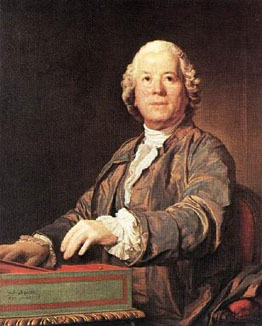
Christoph Willibald Gluck became a reformer of
opera in what is now called the early classical period.
opera in what is now called the early classical period.
Historical Period: Classical
Nationality: Germany
Born: 2 July, 1714; Erasbach, Germany
Died: 15 Nov, 1787; Vienna, Austria
Cause of death: Stroke
Father: Alexander Gluck
Wife: Marianne Pergin
Daughter: Marianne (his niece, adopted)
Contemporaries: J.S. Bach, G.F. Handel
What's Happening in History? It is the 1700's; the First Copyright Act has been passed in Britain (1709); in North America there is fighting with the Tuscarora Indians; Jean Jacques Rousseau, the French philosopher, dies (1712); the same year that the Shawnee Indians established themselves in Ohio. The United States of America is not a country yet, just colonies (more world history during the 1700's here).
Beginning. It was around this time that Christoph Gluck was born to Alexander and Marianne Gluck on July 2, 1714 in the country of Germany. Alexander Gluck worked for Prince Lobkowitz as a gamekeeper to provide for the family. Although the name may make one think that it has something to do with sports, a gamekeeper took care of animals. Marianne, his mother, took care of the house and helped Alexander. Alexander's job for Prince Lobkowitz made it possible for Christoph to get a good education at the Jesuit School of Kommotau from twelve to eighteen years of age; a Jesuit is a kind of Catholic priest. Not much has changed today, parents are still responsible to make sure their children are in a good school. This is where Christoph received music lessons alongside his general education. At eighteen years of age, Christoph went to Prague, Austria, to continue studying music with Czernohorsky. I wonder if Christoph called his teacher Mr. Czerno or Mr. Hors for fun.
Working. As Christoph was studying in Prague, he had to work to pay for food, clothes, a place to live, and other necessities. At first, Christoph worked playing the violin at county fairs and dances. After a while, with the help of Prince Lobkowitz, Christoph was able to meet some richer families, which in turn helped him get a better job teaching music. It is good to ask others for help. In 1736, Christoph went to work in the city of Vienna and then moved to Milan, Italy to study with a famous teacher named Giovanni Battista San Martini. It was around this time, 1741-1745, that Gluck started writing operas, and Italians loved going to watch operas. Operas are like movies in that there are actors, cool costumes, and there is a story being told. But, operas also have something that movies do not have: singing! People liked Gluck's operas so much that he was invited to London to write more operas there; the first one is called La Caduta dei giganti. Gluck not only wrote operas, he also performed on musical glasses, which is kind of interesting! It was also in London that Christoph became friends with George Friedrich Handel, another famous composer. Gluck admired Handel so much that he kept a picture of Handel in his bedroom to be inspired by it.
Reforming. In 1762, with the help and encouragement of his friend, Raniero da Calzabigi, Christoph made some big changes to the way opera was performed. It was his opera Orfeo ed Euridice that showed off these changes. The overture started the opera to introduce the drama and mood; instead of having singers show off their singing skills, the opera now told the story simply. Poetry and music were now bound together to show the emotion of the story and dramatic continuity.
Christoph Gluck was the opera man, that's what he focused on in his life and he did not give up. Gluck's perseverance and openness made a big difference in the musical world. Do not give up on your music, keep pushing yourself!
Wednesday, March 27, 2013
Mastering the (Rubber) Bow Hand
Violinists,
Violists, Cellists, and Contrabassists (usually we just call them “bassists”) need a good bow hand (some call it a “bow grip” or a “bow hold”) to produce a
beautiful tone (the kind of sound you make) on their instrument. This good
bow hand is a relaxed, tense free, firm bow hand. Sounds like a contradiction, right? I mean how can your hand be relaxed, tense free and firm at the same time?
What helps me to imagine this is a good quality rubber band. You can stretch the rubber band (something that is flexible and relaxed we can say) and at the same time it is firm because you can only pull it only so far before it breaks. The same goes for the bow hand. The fingers are firm and flexible at the same time. The picture of the hand being like a rubber band is no a perfect one, but it may help you like it helped me.
So how do you get this rubber bow hand?
Short answer: Consistent concentration, practice and patience to have curved, firm and flexible fingers.
Longer answer: As you practice regularly (this means that you have a goal for how often and how much to practice) you will make it a priority to achieve the rubber bow hand by spend time doing exercises patiently to attain this wonderful phenomenon of curved, flexible and firm fingers. The pinky is standing on top close to the ring finger, the ring and middle finger are on the frog, the index finger leans passed the middle knuckle, close to the middle finger.
Inside Scoop: This is why teachers spend time with you the first 2 years of lessons working on your bow hand; it is a part of the foundation of being an excellent string musician. So do not get upset with them for taking so long, it will pay off big time in the long run, join them in the journey!
What can I do to achieve the amazing rubber bow hand?
1. The Pencil Miracle. Take a pencil (or pen, or marker, etc.) and apply the bow hand. Hold the pencil as lightly as possible, see how gently and lightly you can hold it until it falls out of your hand! Then practice bow taps, your songs, and whatever else you like in the air with the pencil miracle!
2. The Bow Tap. Take the pencil in your bow hand, once it’s ready. Tap each finger 5 times while keep the non-tapping fingers in a perfect bow hand position. 5 to start off, after 2 weeks tap each finger 10 times, keep adding 5 more taps until you can tap each finger 25-30 times with a perfect rubber bow hand.
3. The Air Bowing. Take the bow in your bow hand and practice songs in the air like a rocket, like a car parallel to the ground, then slanted like on the violin.
I only listed three exercises because you probably know others from your teacher. Do these simple exercises consistently, patiently with concentration during your practice and you are on the road to the amazing, wonderful, incredible rubber bow hand!
Copyright © 2013 Mircea & Daniyela Ionescu. All rights reserved.
bow hand is a relaxed, tense free, firm bow hand. Sounds like a contradiction, right? I mean how can your hand be relaxed, tense free and firm at the same time?
What helps me to imagine this is a good quality rubber band. You can stretch the rubber band (something that is flexible and relaxed we can say) and at the same time it is firm because you can only pull it only so far before it breaks. The same goes for the bow hand. The fingers are firm and flexible at the same time. The picture of the hand being like a rubber band is no a perfect one, but it may help you like it helped me.
So how do you get this rubber bow hand?
Short answer: Consistent concentration, practice and patience to have curved, firm and flexible fingers.
Longer answer: As you practice regularly (this means that you have a goal for how often and how much to practice) you will make it a priority to achieve the rubber bow hand by spend time doing exercises patiently to attain this wonderful phenomenon of curved, flexible and firm fingers. The pinky is standing on top close to the ring finger, the ring and middle finger are on the frog, the index finger leans passed the middle knuckle, close to the middle finger.
Inside Scoop: This is why teachers spend time with you the first 2 years of lessons working on your bow hand; it is a part of the foundation of being an excellent string musician. So do not get upset with them for taking so long, it will pay off big time in the long run, join them in the journey!
What can I do to achieve the amazing rubber bow hand?
1. The Pencil Miracle. Take a pencil (or pen, or marker, etc.) and apply the bow hand. Hold the pencil as lightly as possible, see how gently and lightly you can hold it until it falls out of your hand! Then practice bow taps, your songs, and whatever else you like in the air with the pencil miracle!
2. The Bow Tap. Take the pencil in your bow hand, once it’s ready. Tap each finger 5 times while keep the non-tapping fingers in a perfect bow hand position. 5 to start off, after 2 weeks tap each finger 10 times, keep adding 5 more taps until you can tap each finger 25-30 times with a perfect rubber bow hand.
3. The Air Bowing. Take the bow in your bow hand and practice songs in the air like a rocket, like a car parallel to the ground, then slanted like on the violin.
I only listed three exercises because you probably know others from your teacher. Do these simple exercises consistently, patiently with concentration during your practice and you are on the road to the amazing, wonderful, incredible rubber bow hand!
Copyright © 2013 Mircea & Daniyela Ionescu. All rights reserved.
How Much and How Often Should I Practice?
Good question. This
is a question that students, parents and teachers struggle to answer.
And, of course, there are many stances on this issue, some of these stances make sense and other do not make sense.
I will not evaluate other stances here, but I will give you mine. Here is the way that I think about it: age, level, goals. I use these three categories to decide how long and how often someone needs to practice. For
instance, a five year old (age) that’s just started (level) and whose parents
want him to get a good well-rounded education (goals) will practice differently than a seventeen-year old that is in the top orchestra at school that’s
interested to keep it as an extra-curricular activity while in college.
Whatever your age, level
and goals, it is best to strive for consistency and realistic goals in
practicing your music. Realistic goals are crucial because many people make
drastic changes in their practicing that do not last long, so they get discouraged, feel like failures
and practice less or give up. Therefore, it is better to start where you are and take one
step up from there.
So here are some general
guidelines:
1. Days per Week: No
matter the age, level and goals start with practicing 3 days a week. Commit to
that and you if you get some weeks where you practice a day or two more, that’s
good! After a month, you are ready to push for 4 days and so forth.
2. Minutes per Day: Start
out with 10 – 15 minutes at a time.
Cover all the material and exercises that your teacher assigned to
you. Get consistent at this for a month,
then push for 20 minutes. If your son or
daughter is 4-8 years of age, you may need to patient because 10-15 minutes per
day maybe the most they can do with you for a few months. Eventually, you will be at a level that will
require 30 minutes up to 1. 5 hours. This
of course is after a few years of lessons and practicing consistently less
time.
As
you are working on your consistency and regularity of practice, remember that
the quality of time (efficiency, concentration, and expressiveness) is just as
important as the quantity of time that you practice. Always seek
to enjoy your practicing, it’s time well spent!
Copyright © 2013 Mircea & Daniyela Ionescu. All rights reserved.
Copyright © 2013 Mircea & Daniyela Ionescu. All rights reserved.
Tuesday, March 26, 2013
Inspiring to Practice
So you or your child have started lessons but the excitement of the "new" is wearing off, just like new toys and video games at Christmas. What do you do to keep practicing going?
An Ongoing Journey. So let me just tell you upfront that there is no quick solution, no special words or gimmicks that will cause unceasing inspiration to practice an instrument. Learning how to practice and learning to practice consistently is an ongoing journey. So enjoy the journey and try different strategies to keep the journey going.
For those of you that are parents, you want your children to grow into mature adults, to have a disposition of the heart that knows what is important in life, keep doing these valuable things consistently, and enjoy them at the same time. Recognizing and treasuring the great things in life is also what you want for yourself. Part of this growth occurs when you and your family seek ways to be inspired, build discipline and move forward. Remember that the goal in music lessons is to gain a well-rounded life, which includes enjoying to play the instrument with feeling and excellence, but it is not just music lessons.
What I have noticed is that some students struggle with practicing because of the values they have adopted. They are used to immediate gratification, whether it's the candy, the video games, the internet time they want, they get it quickly. They are used to quick results and so are you. This is not how it works with learning an instrument, or even a good career. The lessons open you and your child up to the opportunity to grow in this area of working hard and awaiting the pay off, lots of good conversations on the importance of hard work, patience and perseverance, etc.
Alongside the conversations, here are some things to keep the inspiration going:
Music in the Air. With all the wonderful technology that is around you can find recordings on the instrument that you or your child is learning. It is also an opportunity to go to the library, where you can look at CD's and pick one out. Have music playing around often.
Home Recitals. Pick a day out of the week to perform for family and friends whatever pieces you know. Even if it's only one piece, it will motivate you and/or your child to keep going.
Go to Concerts. There are lots of free concerts in town; check out the high schools and colleges. There is probably a youth orchestra that you can go watch. Get out of the house and enjoy!
Group Playing. Invite friends over to play the pieces that you know together. There are group classes available if you look around. The youth orchestra usually offers group classes and/or ensemble playing for various levels of experience. Playing with others pushes you to keep going.
What ideas have you learned and come up with to keep you and your child motivated to keep playing? What are your struggles to practicing at home?
Copyright © 2013 Mircea & Daniyela Ionescu. All rights reserved.
Monday, March 25, 2013
Don't Got Money For Lessons
With the
economic problems in the last few years many of us have had to give up some
things, cut back on luxuries and prioritize our spending. Now you have heard about private lessons –
tutoring, but you are not sure you can afford it. You probably can.
Prioritzing. Many of us are not very disciplined about our finances, we live to spend. So we need to take time to prioritize things in your life. After necessities are settled (food, shelter, transportation), we need to consider: Where do private lessons fall? Are they crucial to you or your child’s overall education? Are music lessons another hobby, like soccer?
The cost for lessons can run from $15-30 per thirty-minute lesson every week. For some people this is the cost of eating out one night a week. So you can think of it as giving up one trip to the restaurant per week.
However you think about it, husbands and wives need to talk through these important issues so that they can discern whether or not to proceed with private lessons. It is a team effort planning out education.
Are the benefits of private lessons-tutoring worth the cost that you will incur? Yes! Whether they are cello lessons, ACT and SAT prep, helping yourself become more well-rounded, or helping your child bolster their math skills, it is worth it. Private lessons always affect other areas of life, like concentration, self-discipline, confidence, comprehension and verbal skills.
The going rate is about these days is about $20-25 for 30 minutes a week, which means that if you cut out one trip per week to a restaurant, the movie theaters, or other forms of entertainment, you can take private lessons! Try them out for a year and you will see that it's worth the investment.
How have you dealt with the financial part of private lessons?
Prioritzing. Many of us are not very disciplined about our finances, we live to spend. So we need to take time to prioritize things in your life. After necessities are settled (food, shelter, transportation), we need to consider: Where do private lessons fall? Are they crucial to you or your child’s overall education? Are music lessons another hobby, like soccer?
The cost for lessons can run from $15-30 per thirty-minute lesson every week. For some people this is the cost of eating out one night a week. So you can think of it as giving up one trip to the restaurant per week.
However you think about it, husbands and wives need to talk through these important issues so that they can discern whether or not to proceed with private lessons. It is a team effort planning out education.
Are the benefits of private lessons-tutoring worth the cost that you will incur? Yes! Whether they are cello lessons, ACT and SAT prep, helping yourself become more well-rounded, or helping your child bolster their math skills, it is worth it. Private lessons always affect other areas of life, like concentration, self-discipline, confidence, comprehension and verbal skills.
The going rate is about these days is about $20-25 for 30 minutes a week, which means that if you cut out one trip per week to a restaurant, the movie theaters, or other forms of entertainment, you can take private lessons! Try them out for a year and you will see that it's worth the investment.
How have you dealt with the financial part of private lessons?
Copyright © 2013 Mircea & Daniyela Ionescu. All rights reserved.
Thursday, March 21, 2013
Free Trial Lesson
Take advantage of it!
Here's what I typically do in a free trial lesson:
1. Introductions. I tell a little bit about my background, why I teach lessons and then I ask the parent about his or her background, and how they became interested in lessons. Then, I ask the student about their experience with the subject or instrument.
2. Go over my teaching approach and policies with the parent and student. It is important to talk through all of this, so that there is no misunderstanding. That sounds good to you, but maybe you are wondering why have the student there for this part? The student needs to hear about my expectations and it gives us the opportunity to interact.
3. I work with the student. Now it's time for some action, we work on something together. If they have never played, let's say the violin, then I will teach the student the parts of the violin and bow, how to care for the instrument, playing and rest position, how to hold the bow, play some rhythms on the open strings, and some educational games to put in practice what has been learned.
4. Demonstration. I usually finish demonstrating a piece of music that the student will learn in the course of their study with me.
It does not have to be very complicated and the free lesson only gives you a glimpse, so there's no need to have high expectations. Everyone tries to make good first impressions, we all have good days and bad days, it's part of life. Take your time and visit a few teachers, so that you can compare and contrast.
Copyright © 2013 Mircea & Daniyela Ionescu. All rights reserved.
Subscribe to:
Comments (Atom)