Showing posts with label Romantic composer. Show all posts

Tuesday, August 4, 2015

Robert Schumann, Part 1


Robert Schumann, one of the greatest Romantic composers, was born in Zwickau, a part of South Eastern Germany. However, Schumann did not start out as a composer. Much like other young men and women, he grudgingly followed the advice of his parents in schooling, in his case law school -- a practical pursuit according to many people. If you remember, G.F. Handel first started studied to become a lawyer as his dad asked him. While at law school, Schumann spent most of his time studying not law, but the piano. He was encouraged in his piano pursuits by Friedrich Wieck, Schumann's soon to be father-in-law. Wieck was a well known piano teacher and father of a gifted piano prodigy, Clara. Around this time, Clara, the future wife of Robert Schumann, was just starting her piano career when her father took Robert Schumann on as a student. Unfortunately, his dreams of becoming a concert pianist were shattered when he injured the muscles in his hand. Not to let this get him down, Robert channeled his energy into creating beautiful compositions for the world to enjoy. For Schumann, this was a period of prolific composition in piano pieces, which were published either at once or, in revised forms, later. Among them were the piano cycles Papillons and Carnaval (composed 1833–35) and the Études symphoniques (1834–37; Symphonic Studies), another work consisting of a set of variations.

In 1834, Schumann had become engaged to Ernestine von Fricken, but started falling in love with Clara Wieck. Clara liked him too, but obeyed her father when he ordered not to date Schumann. So for 16 months Schumann could not see Clara, so he composed more music. He wrote the great Fantasy in C Major for piano and edited the Neue Zeitschrift für Musik (New Journal for Music), a periodical that he had helped to start in 1834. But Schumann did not stop liking Clara, so he got courageous in 1837 and formally asked Clara’s father for permission to marry her. Clara's dad, Wieck, did not say "no" but he also did not say "yes;" he evaded Schumann's request. Eventually, Robert and Clara were married in 1840.

Schumann spent many years composing many songs and pieces for different instruments, but especially the piano. Schumann wrote many songs to be sung (called Lieder) by one or a few singers, songs for the choir, pieces for the orchestra and concertos, and chamber music. Finally, Schumann became so sick that he stayed in a hospital until he died in 1854.  
 
By guest author: Matthew F.

Wednesday, May 6, 2015

Muzio Clementi: The Father of Pianoforte Playing


Historical Period: Classical - Romantic
Nationality: Italian
Born: January 23, 1752; Rome, Italy
Died: March 10, 1832; Evesham, England
Contemporaries: Ludwig van Beethoven, Carl Czerny, Franz Josef Haydn, Wolfgang Amadeus Mozart
Works:110 piano sonatas, operas, and symphonies

What's Happening in History?
The British colonies in America declare their independence from England in 1776 and Napoleon Bonaparte is rising to power in France as the country has gone through a revolution killing many innocent people. At the same time, Jane Austen has published her first novel, Sense and Sensibility, in 1811.


Life and Education
Muzio Filippo Vincenzo Francesco Saverio Clement (baptized Mutius Philippus Vincentius Franciscus Xaverius) was born in Rome, Italy on January 23, 1752. His father, Nicolo, was a well-known silversmith who married a Swiss woman named Madalena. Little Muzio was the first of seven children in the family, which makes it all the more incredible that his parents had time for him.

Muzio's father soon realized that his little boy had musical talent, and he arranged for a relative, Antonio Baroni, to give Muzio private music instruction. At seven years old, Muzio was learning figured bass, a system of music notation where numbers stand for chords. At eleven or twelve years he learned counterpoint, and at 13 he had already composed an oratorio and a mass. When he was just fourteen years old, Muzio became an organist at the local parish. In this way, Clementi followed in the footsteps of Bach and Handel.

In 1766, a wealthy Englishman named Sir Peter Beckford visited Rome. He was very impressed with Muzio's talent at the keyboard and asked Signour Clementi to let his son move to England with Sir Peter. Muzio's father agreed, and so off they went to Sir Peter's estate in Dorset, England. Muzio must have been heartbroken to leave his family for a country so far away, but as a young man he was probably very excited as well. We can already see the growing commitment from Clementi's family to invest in music as a career.

Sir Peter Beckford promised he would pay for lessons until Muzio was twenty-one. In return, Muzio would perform for Sir Peter and his guests. During this time, it is said that Muzio practised 8 hours a day at the harpsichord. He practised music of J. S. Bach, Domenico Scarlatti, George Frederic Handel, and others. In 1770, Muzio gave his first public performance on the organ.

Guest Author: Rachel

Sunday, March 1, 2015

Rossini's Barber of Seville


I love outdoor performances. Here is the Tonkünstler-Orchester Niederösterreich conducted by Andrés Orozco-Estrada at the Sommernachtsgala Grafenegg in 2012. This is another piece that I am performing with the Louisville Philharmonia at our next concert. It is nice to see the up-close shots of the instrumentalists and the beautiful scenery of the countryside.

On the day after Christmas, December 26, 1813 Gioachino Rossini's opera Il barbiere di Siviglia (The Barber of Seville) had its opening night and it was a fiasco. The opera is based on Beaumarchais’s play with the same title, which was already set as an opera a few times with a favorite already reigning for over 30 years. So, Rossini had originally titled the opera the title Almaviva, ossia L’inutile precauzione, but everyone knew what he was doing and many were outraged that Rossini would directly compete with the favorite Paisiello version. But by it's second performance Rossini's version was already winning out; it is said that the crowd was coming after the performance to congratulate Rossini. It is said that it only took Rossini 13 days to compose the entire opera with the overture copied from two previous operas.

Sunday, February 22, 2015

Symphony No. 2 by Johannes Brahms


Here is the Wiener Philharmoniker in 1982 directed by Leonard Bernstein performing Symphony No. 2 by Johannes Brahms.

I am listening to it today to be motivated, refreshed with the way it goes, catch some tips on tempo, intonation, expressiveness, ensemble, and anything else that I can catch to get ready for the rehearsal Monday with the Louisville Philharmonia.

Brahms wrote his Second Symphony in D Major on his summer vacation of 1877 in the village of Portschach. just months after his celebrated First Symphony. On December 30, 1877 the Second Symphony was premiered by Hans Richter. Following in the footsteps of Beethoven, the symphony is about 40 minutes. Some call this the Pastoral Symphony in memory and comparison with Beethoven.

 You never get to old or too good to gain from others, especially master musicians. Bernstein is an especially good conductor so I am appreciate listening to this recording. Enjoy!

Tuesday, January 27, 2015

Hector Berlioz: France's Romantic Composer - Part 4

Final Years and Legacy

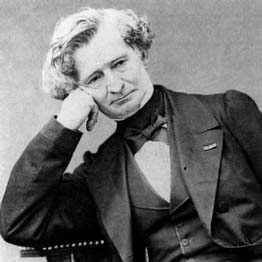
http://www.samuelhuet.com/graisivaudan/berlioz/img01.jpg     After his extensive travels throughout Europe, Berlioz  returned to Paris incapacitated by illness and saddened by many deaths. His first wife died in 1854; his second wife, Maria Recio, who had been his companion for many years and whom he had married when he became a widower, died suddenly in 1862. His son, Louis,  on whom Berlioz concentrated the affection of his declining years, died at the age of 33 of yellow fever.

 These dramatic events did not stop Berlioz from composing more music and traveling. In 1861 Berlioz produced his work Beatrice et Benedict, and in 1863 Les Troyens.  In 1866 Berlioz journeyed to Vienna and Russia where his music was accepted with great enthusiasm.

Following those tours, a lonely Berlioz returned to Paris where he died on March 8, 1869.  He left behind him many innovative compositions that had set the tone for the romantic period. He was a great inspiration to composers such as Franz Liszt and Richard Wagner. Although some of his work was not well received during his life, his popularity increased after his death. Richard Wanger once said of Berlioz: “The reckless boldness and severe precision…took me by storm and impetuously fanned the flames of my personal feeling for music and poetry.”