Showing posts with label romantic period. Show all posts

Tuesday, August 4, 2015

Robert Schumann, Part 1


Robert Schumann, one of the greatest Romantic composers, was born in Zwickau, a part of South Eastern Germany. However, Schumann did not start out as a composer. Much like other young men and women, he grudgingly followed the advice of his parents in schooling, in his case law school -- a practical pursuit according to many people. If you remember, G.F. Handel first started studied to become a lawyer as his dad asked him. While at law school, Schumann spent most of his time studying not law, but the piano. He was encouraged in his piano pursuits by Friedrich Wieck, Schumann's soon to be father-in-law. Wieck was a well known piano teacher and father of a gifted piano prodigy, Clara. Around this time, Clara, the future wife of Robert Schumann, was just starting her piano career when her father took Robert Schumann on as a student. Unfortunately, his dreams of becoming a concert pianist were shattered when he injured the muscles in his hand. Not to let this get him down, Robert channeled his energy into creating beautiful compositions for the world to enjoy. For Schumann, this was a period of prolific composition in piano pieces, which were published either at once or, in revised forms, later. Among them were the piano cycles Papillons and Carnaval (composed 1833–35) and the Études symphoniques (1834–37; Symphonic Studies), another work consisting of a set of variations.

In 1834, Schumann had become engaged to Ernestine von Fricken, but started falling in love with Clara Wieck. Clara liked him too, but obeyed her father when he ordered not to date Schumann. So for 16 months Schumann could not see Clara, so he composed more music. He wrote the great Fantasy in C Major for piano and edited the Neue Zeitschrift für Musik (New Journal for Music), a periodical that he had helped to start in 1834. But Schumann did not stop liking Clara, so he got courageous in 1837 and formally asked Clara’s father for permission to marry her. Clara's dad, Wieck, did not say "no" but he also did not say "yes;" he evaded Schumann's request. Eventually, Robert and Clara were married in 1840.

Schumann spent many years composing many songs and pieces for different instruments, but especially the piano. Schumann wrote many songs to be sung (called Lieder) by one or a few singers, songs for the choir, pieces for the orchestra and concertos, and chamber music. Finally, Schumann became so sick that he stayed in a hospital until he died in 1854.  
 
By guest author: Matthew F.

Tuesday, July 21, 2015

Schumann's Piano Sonata No. 1


     Here is Robert Schumann's Piano Sonata No. 1, 1st movement, Op. 11. In this recording the sonata is performed by Klara Wurtz. The sonata is in F# minor

Robert Schumann is one of the greatest Romantic composers, writing numerous works for the piano. His pieces are usually very melodic and this piano sonata especially so having the main motif (musical phrase) a falling interval of a fifth. The piece is so melodic, in part, because Schumann based the slow movement on a song he wrote when he was eighteen years old. Schumannn starting composing this sonata at 23 years of age and published anonymously under the names Florestan and Eusebius. The sonata is in four movements: 1. Introduzione. Un poco Adagio - Allegro vivace 2. Aria 3. Scherzo e Intermezzo. Allegrissimo 4. Finale. Allegro un poco maestoso.

This sonata is the kind of piece that an aspiring pianist will study for years to really master it. And that is the point, isn't it? Pieces that inspire us, push us, make us reach further than we thought possible.

Sunday, March 1, 2015

Rossini's Barber of Seville


I love outdoor performances. Here is the Tonkünstler-Orchester Niederösterreich conducted by Andrés Orozco-Estrada at the Sommernachtsgala Grafenegg in 2012. This is another piece that I am performing with the Louisville Philharmonia at our next concert. It is nice to see the up-close shots of the instrumentalists and the beautiful scenery of the countryside.

On the day after Christmas, December 26, 1813 Gioachino Rossini's opera Il barbiere di Siviglia (The Barber of Seville) had its opening night and it was a fiasco. The opera is based on Beaumarchais’s play with the same title, which was already set as an opera a few times with a favorite already reigning for over 30 years. So, Rossini had originally titled the opera the title Almaviva, ossia L’inutile precauzione, but everyone knew what he was doing and many were outraged that Rossini would directly compete with the favorite Paisiello version. But by it's second performance Rossini's version was already winning out; it is said that the crowd was coming after the performance to congratulate Rossini. It is said that it only took Rossini 13 days to compose the entire opera with the overture copied from two previous operas.

Tuesday, January 27, 2015

Hector Berlioz: France's Romantic Composer - Part 4

Final Years and Legacy

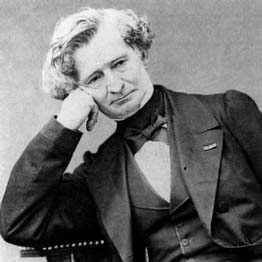
http://www.samuelhuet.com/graisivaudan/berlioz/img01.jpg     After his extensive travels throughout Europe, Berlioz  returned to Paris incapacitated by illness and saddened by many deaths. His first wife died in 1854; his second wife, Maria Recio, who had been his companion for many years and whom he had married when he became a widower, died suddenly in 1862. His son, Louis,  on whom Berlioz concentrated the affection of his declining years, died at the age of 33 of yellow fever.

 These dramatic events did not stop Berlioz from composing more music and traveling. In 1861 Berlioz produced his work Beatrice et Benedict, and in 1863 Les Troyens.  In 1866 Berlioz journeyed to Vienna and Russia where his music was accepted with great enthusiasm.

Following those tours, a lonely Berlioz returned to Paris where he died on March 8, 1869.  He left behind him many innovative compositions that had set the tone for the romantic period. He was a great inspiration to composers such as Franz Liszt and Richard Wagner. Although some of his work was not well received during his life, his popularity increased after his death. Richard Wanger once said of Berlioz: “The reckless boldness and severe precision…took me by storm and impetuously fanned the flames of my personal feeling for music and poetry.”

Tuesday, November 18, 2014

Ludwig van Beethoven: Storm and Stress, Part 3


          In our first and second posts on Ludwig van Beethoven we looked at his early life and music. We will now look at the big changes that would await him in his later years as well as some of his most famous works.

Big Changes
          In April 1800, Ludwig rented a concert hall and performed some of Mozart’s and Haydn’s pieces. He also played a few of his own newly composed. The concert didn’t really turn out well, mostly because the orchestra didn't follow the soloist.
          Around this time, Ludwig began giving music lessons to the daughters of Countess Anna Brunsvik. He fell in love with the younger daughter, Josephine. But since she was the daughter of a countess, and he was only a poor composer, she married off to someone else soon after he began giving her lessons. Beethoven was  very picky about the students that he took on and, at the same time, very dedicated to those he accepted. One of the most famous were Carl Czerny who later taught Franz Lizst.

           The next few years were a bit more prosperous for Ludwig mostly due to the fact that his brother came and helped him manage his money and sell his music.

           But, at age 26, Ludwig tragically began to lose his hearing. He suffered from a ringing in his ears that eventually made him completely deaf. So little by little he could not hear the music he composed. Ludwig also suffered from stomach pain all his life. He moved to a small country town outside Vienna hoping that it  would help his health, which led him to become very depressed during this time. He didn’t want to keep on living, but he wrote a letter to his brothers saying that he would continue to live for and through music.

           When Ludwig returned to Vienna, he began composing more heroic, grand pieces, like his Fifth Symphony. He was very ill at different times during this period. He was also nursing his brother through tuberculosis and taking care of his family, which took a great deal of his money.

His Final Years           

          When his brother died, he fought his nephew’s mother for guardianship of his nephew, because Ludwig thought he could take better care of him. (This nephew’s mother was, among other things, a convicted thief, so it’s no wonder Ludwig didn’t trust her.) During the last years of his life, he tried to control his nephew’s life, but it didn’t turn out very well.

          He wrote his Ninth Symphony in those last years. At the time, he had begun studying older pieces of music in depth – mostly music by Handel and J. S. Bach. But his health was getting worse and worse, and on March 26, 1827, Ludwig died at age 56. The story goes that there was a huge clap of thunder, and the dying man sat up in bed and shook his fist at the thunder, defying nature even as he died.

Music
          Ludwig van Beethoven is one of the most famous composers of all time. Some of his well-known pieces include the MoonlightSonata, the Ninth Symphony, Fur Elise, and the Pathetique sonata. He also wrote one opera, called Fidelio

          Beethoven is an important composer because he helped usher music into its next stage, the Romantic era, by writing powerful, grand pieces. So, he is famous as both a classical and a romantic composer. His life was full of trouble and sickness, but he refused to let that stop him from writing his music. His music is sometimes grand and exciting, and at other times it is soft and sensitive. No one can deny that he is one of the best composers that has ever lived.


Tuesday, November 11, 2014

Ludwig van Beethoven: Storm and Stress, Part 2

In our first post on Ludwig van Beethoven, we looked at his beginnings in music. He was first taught music by his father and performed regularly, then got the opportunity to study under and work for Christian Neefe. 

Rise to Fame


After the death of his mother, Beethoven's father Johann turned to alcohol to find comfort in his sadness over his wife’s death. So eighteen-year-old Ludwig not only had to deal with his mother’s death and his father’s drinking problems, but he also took charge of his two younger brothers. As a result, Ludwig stayed in Bonn for the next five years, playing the viola in the court orchestra to earn money to support himself and his brothers.
          A few years pass and in March 1792, at the age of 22 Ludwig left for Vienna to study and work on his counterpoint under Franz Josef Haydn and a few other teachers. It was around this time that he composed the Piano Trios. Soon after he arrived, he heard that his father had died. It was at this time that Ludwig started becoming popular and making a name for himself in Vienna over the next few years by improvising music for parties he was hired to play, performing many Bach pieces which he had memorized. During this time, Ludwig wrote pieces of music in the Classical style, like Mozart and Haydn. Soon, not only was Beethoven becoming popular for his extraordinary performance skills, but he was also slowly becoming famous for his compositions. Many rich and famous people paid him money for his musical work, even though he was known around Vienna as a rude and short-tempered man with a disdain for authority and high rank. He stopped playing if the audience whispered among themselves or made any noise and refused to perform if someone asked him to play without giving him previous warning. However, his rude behavior was always overlooked because of his great talent and passion.

Guest author: Rachel Holbrook


Come back next week for Part 3!


Monday, September 8, 2014

Student Post: Sergei Rachmaninoff - The Forgotten Composer, Part 2

Part 1 here.

Career
 
After years of hard work, in 1892 Sergei graduated with a gold medal. He was only 19 years old!

The gold medal was for his opera Aleko, which was first performed in 1893. It was admired by a great many people, including Pyotr Tchaikovsky. (Tchaikovsky even asked if Sergei's opera could be performed with one of Tchaikovsky's, which excited Sergei very much.) But Sergei's First Symphony was not so well received. In fact, nobody liked it. Sergei was so upset that he stopped composing for a while. He didn't write any more music for almost three years.

He did start writing again, though, and before World War I started, he had written three concertos, two more symphonies, a symphonic poem, many songs, and lots of piano music. The piano music was written partly for his own amazing hands, so the music is very difficult and full of wide stretches.

In 1902, Sergei finally married his fiancée and cousin Natalia Satina. In the beginning, Sergei was in love with her younger sister, Vera, but Vera and Natalia's mother would have none of that. So Sergei wrote back and forth with Natalia. By the time of their wedding, they had been engaged for three years.

In 1917, the Russian Revolution broke out. The Rachmaninoff family were aristocrats, and so the forty-four-year-old Sergei moved to Switzerland with his family (his wife and two daughters) and decided to focus more on the piano. Many people in the United States offered him work as a composer, and although he turned them down, he finally decided that moving to America would solve some of his financial problems. In 1935, he moved to the United States. He kept composing during this time, even though he was very sad to leave Russia. He and his family tried to make their house in America like their house in Russia.

Sergei became ill during a concert tour in late 1942 and was diagnosed with melanoma, a type of skin cancer (The doctors told his family, but not him). Soon after, he and his wife became American citizens, just two months before he died. He died in Beverly Hills, California, four days before his 70th birthday.

Music

Sergei wrote a lot of music, including: Piano Concerto No. 4; the Variations on a Theme by Corelli, for solo piano; the Rhapsody on a Theme of Paganini, for piano and orchestra; the Third Symphony; and the Symphonic Dances, as well as pieces like Vocalise, Variations on a Theme of Chopin, and The Isle of the Dead. Sergei Rachmaninoff has been somewhat forgotten, but his music is still popular. He was perhaps the best pianist of his lifetime. As part of his daily warm-up exercises, Sergei would play the difficult Étude in A flat, Op. 1, No. 2, by Paul de Schlozer. When performing, he would go up on stage, sit down at the piano, and wait for the audience to be quiet. When he played, it was perfect: he never made a mistake, and his playing could be heard in the back row of the music hall. And he remembered things - if he heard a piece of music just once, he could remember it for a long time, note by note. He could sit down the next day, or six months later, or ten years later, and play it on the piano. He was dedicated to music - he once said, "That is the most important thing for me in my interpretations, color. So you make music live. Without color it is dead." 

Guest Writer: Rachel Holbrook

Wednesday, July 23, 2014

Student Post: Johannes Brahms, Part 1


Let’s go back about 200 years to a time of music before Katy Perry and Bruno Mars where a marvelous masterpiece of music lived who was born in 1833. This man of compositions more beautiful than a flower, more creative then art and more suspense and adventure then Tom and Jerry was named Johannes Brahms (Yo-han-ess Bram-s). He was born in Germany in the year 1833 and he was a composer and pianist. He wrote and composed many symphonies (orchestra music), concerto (solo instrument or an instrument accompanied my orchestra), chamber music (music held for small groups of people), piano work and choral compositions (compositions usually written for chorus or choir). So, what’s so important about an old dude playing piano? More than you can think up!

   
 The Beginning

     Johannes Brahms was born May 7, 1833 in Hamburg, Germany in the romantic era explaining the reason why some of his works were romantic. Brahms was the second born child, out of three, born to Johanna Henrika Christiane Nissen and Johann Jakob Brahms. At an early age Brahms was intrigued with music and began playing piano at the age of 7. As a teenager Brahms was already an accomplished musician, unlike most teenagers nowadays. He would play wherever he could to help provide his family with money. Brahms had quickly become famous when a close friend named Robert Schumann (renowned German composer) had talked about Johannes Brahms’ beautiful music in a famous article. Soon new sounds became popular leading Schumann and Brahms to indulge in this harmonic beauty and making many famous composers famous. Unexpectedly, Schumann fell ill in 1854 and died in 1856. Just as Dory would say, “just keep swimming” and that’s exactly what Brahms did after Schumann’s death, he moved on. Several years after the tragedy, Brahms played in many places and wrote famous pieces such as “String sextet in B-Major” and “Piano Concerto in No.1 in D Minor."
 

        A Change in a New Place

     In the early 1860’s Brahms made his way to Vienna (a city in Austria) where 3 years later was appointed director to a choral group named Singakademie. Brahms was delighted at how well life was in Vienna. I mean who wouldn’t like an opportunity to be conductor of “Society of Friends of Music”? Also, Brahms directed the “Vienna Philharmonic Orchestra” for three seasons. In 1868, Brahms’s mother died and it was tragic. But that year was also a year when he finished a piece called “A German Requiem” (which brought together chorus, solo voices and an orchestra), this was a very important composition in his time. In this time he also composed waltzes and two volumes of “Hungarian Dances” for piano which were very popular in his time. 


Check back for part 2. More on Brahms here. What do you like about Johannes Brahms? 

By a Suzuki Book 1 violin 7th grade student


Resources