Showing posts with label composer of the month. Show all posts

Monday, March 16, 2015

Bach's Brandenburg Concertos


     The Münchener Bach-Orchester directed by Karl Richter in J.S. Bach's Brandenburg Concertos. J.S. Bach is known as a great composer and an organist virtuoso, who was a music leader (composer, conductor and accompanist) for the Lutheran church, an orchestra conductor and composer for the Duke of Weimer and for Prince Leopold. In 1721, during his employment for Prince Leopold, Bach wrote six string orchestra concertos called The Brandenburg Concertos dedicated to "His Royal Highness Monseigneur Christian Ludwig, Margrave of Brandenburg."

It all started back in December of 1717 at the age of 32 when Bach was offered the job of Kapellmeister at the Court of Prince Leopold of Anhalt in Cöthen after a month of confinement by his previous employer, the Duke of Weimer. Bach left the Duke for Prince Leopold who loved music and was himself a violinist, harpsichordist and viola da gamba player. After four wonderful years, the prince got married to his cousin, the Princess of Anhalt-Bernburg. Bach and the princess did not like each other, so felt the urgency to seek employment with Christian Lugwig, whom met earlier. So Bach wrote the Margrave Ludwig a letter and sent these six concerti to display his abilities. As far we know, no answer ever came from the Margrave and the pieces were never performed at the Margrave's court.

The six Concerti are three movements each, except for the first concerto which is four movements. The instrumentation is based on the small orchestra that Bach led for Prince Leopold, which why there are some brass, some woodwinds, harpsichord and string orchestra. Each of the concertos has solos from the different sections along with the orchestral style, especially in the First, Third and Sixth Concerto.

Thursday, March 5, 2015

Johann Sebastian Bach: A Passionate Life


     Every month, I talk with my private students about a composer in our lessons. One composer that I have put off until now has been J.S. Bach. He is such a great composer and has influenced my musical life. But this month I am going to introduce my students to Bach, especially since his music is all over the Suzuki books.

As part of my research on a composer I have started looking on Youtube for good biographies and I came upon this one. John Eliot Gardiner has already published a biography on Bach, "Bach-Music in the Castle of Heaven," so this documentary is very interesting.


I have enjoyed the background information on Bach and his family, the pictures of the countryside and all the great music along with it. Check out this great video!

Saturday, February 14, 2015

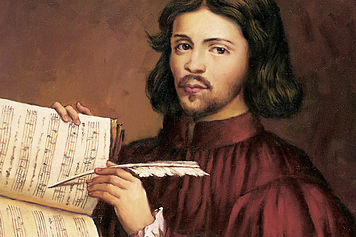
Thomas Tallis: Fading into History II

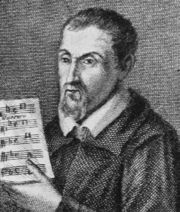
http://www.webpages.uidaho.edu/~rfrey/images/166/Gregorio_Allegri.jpg
Work and Music

Thomas Tallis is often called "the Father of English church music" because he was the first well-known composer to write substantially for the Anglican church.

The earliest works we have by Tallis are songs to the Virgin Mary, a very important figure in Roman Catholicism.  When England became more of a Protestant country, Tallis' style changed - he wrote most of his music set to the liturgy, which is basically a church service written down. Through this phase in his life, Tallis was among the first church musicians to write anthems set to English words, even though Latin continued to be used as the primary language. Then, when the Catholic monarch Queen Mary rose to the throne, so Tallis switched his style back to the Roman Catholic way. After that, Queen Elizabeth I came to power, starting a more Protestant puritanical mood and so Tallis went back to writing in the Protestant style.


Through the years Tallis did a lot of work with William Byrd, one of his students. Queen Elizabeth granted them a patent to print and publish music and exclusive rights to print any music in any language, if it was for the church. But since they were both strong Roman Catholics in a Protestant country, thier music didn't sell very well. However, Tallis kept the respect of others through the religious upheaval.


Tallis didn't like the more modern style of his young students like William Byrd. Tallis was content to write music just for the liturgy of the church. He composed during a difficult time of struggle between Catholicism and Protestantism, and his music often shows that struggle.


Thomas Tallis died in 1585 in Greenwich, England and was buried in the parish of St. Alfege Church.Though little is know about him, Thomas Tallis is still considered by many as one of the greatest composers of English sacred music! Spem in Alium and If Ye Love Me are two of his most famous pieces that are well known and still sung today. This is a little poem about Thomas Tallis that has been found:

 “Entered here doth ly a worthy wyght,
Who for long tyme in musick bore the bell:
His name to shew, was THOMAS TALLYS hyght,
In honest virtuous lyff he dyd excell.

“He serv’d long tyme in chappel with grete prayse
Fower sovereygnes reygnes (a thing not often seen);
I meane Kyng Henry and Prynce Edward’s dayes,
Quene Mary, and Elizabeth oure Quene.

“He mary’d was, though children he had none,
And lyv’d in love full thre and thirty yeres
Wyth loyal spowse, whose name yclypt was JONE,
Who here entomb’d him company now beares.

“As he dyd lyve, so also did he dy,
In myld and quyet sort (O happy man!)
To God ful oft for mercy did he cry,
Wherefore he lyves, let deth do what he can.”


*Written by Rachel, Suzuki book 3 student

Tuesday, February 3, 2015

Thomas Tallis: Fading into History

http://thomas-tallis-society.org.uk/wp-content/uploads/2012/10/Thomas-Tallis1.jpg

Historical Period: Renaissance
Nationality: English
Born: c. 1505
Died: November 23, 1585
Contemporaries: William Byrd, Giovanni Pierluigi de Palastrina, Orlande de Lassus, Andrea Gabrielli, Robert White

Work: Puer Natus Est Nobis, Lutheren chants, Mass for Four Voices
What's Happening in History:
Henry VIII is the king in England, Martin Luther posts his Ninety-Five Theses on the door of Castle Church in Germany, Copernicus publishes his theory that the earth orbits the sun.


Life
 

     Much of Thomas Tallis' early life is hidden from us, but he was one of the greatest composers of his time. Thomas Tallis was born circa (around) 1505 toward the end of the reign of Henry VII. It is thought that Tallis was part of the Chapel Royal St. James' Palace, because he joined it later as a man. The first place music took him was in 1532 when he became an organist of a Benedictine priory called Dover Priory in Kent, England. Tallis then went to London to an Augustinian monastery in Essex, England. 

When the monastery broke up in 1540, Tallis went to Canterbury Cathedral, and then to the English royal Court, where he composed and performed for the monarchs Henry VIII, Edward VI, Queen Mary, and Queen Elizabeth I. As the monarchs changed, the country was torn between Catholic and Protestant monarchs seeking to force their religion on the rest of the nation while persecuting those on the other side. Tallis avoided the mess, even though both he and his friend/student William Byrd were ardent Roman Catholics. In these tumultuous years Tallis was able to switch his music style to fit the different monarchs' demands, showing his creativity and brilliance. 
Tallis was not only a composer, but as many musicians of his time, he was a music teacher as well. Two of his most renowned students include William Byrd, who was a composer, and Elway Bevin, who was an organist.

Amidst all his work, Tallis married Joan around 1552, who outlived him by four years. Unfortunately, Thomas and Joan were never able to have any children, so they did not experience the joys of parenthood. But this sadness did free Tallis up to focus on his music.

Tuesday, January 27, 2015

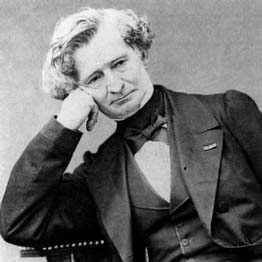
Hector Berlioz: France's Romantic Composer - Part 4

Final Years and Legacy

http://www.samuelhuet.com/graisivaudan/berlioz/img01.jpg     After his extensive travels throughout Europe, Berlioz  returned to Paris incapacitated by illness and saddened by many deaths. His first wife died in 1854; his second wife, Maria Recio, who had been his companion for many years and whom he had married when he became a widower, died suddenly in 1862. His son, Louis,  on whom Berlioz concentrated the affection of his declining years, died at the age of 33 of yellow fever.

 These dramatic events did not stop Berlioz from composing more music and traveling. In 1861 Berlioz produced his work Beatrice et Benedict, and in 1863 Les Troyens.  In 1866 Berlioz journeyed to Vienna and Russia where his music was accepted with great enthusiasm.

Following those tours, a lonely Berlioz returned to Paris where he died on March 8, 1869.  He left behind him many innovative compositions that had set the tone for the romantic period. He was a great inspiration to composers such as Franz Liszt and Richard Wagner. Although some of his work was not well received during his life, his popularity increased after his death. Richard Wanger once said of Berlioz: “The reckless boldness and severe precision…took me by storm and impetuously fanned the flames of my personal feeling for music and poetry.”

Tuesday, November 11, 2014

Ludwig van Beethoven: Storm and Stress, Part 2

In our first post on Ludwig van Beethoven, we looked at his beginnings in music. He was first taught music by his father and performed regularly, then got the opportunity to study under and work for Christian Neefe. 

Rise to Fame


After the death of his mother, Beethoven's father Johann turned to alcohol to find comfort in his sadness over his wife’s death. So eighteen-year-old Ludwig not only had to deal with his mother’s death and his father’s drinking problems, but he also took charge of his two younger brothers. As a result, Ludwig stayed in Bonn for the next five years, playing the viola in the court orchestra to earn money to support himself and his brothers.
          A few years pass and in March 1792, at the age of 22 Ludwig left for Vienna to study and work on his counterpoint under Franz Josef Haydn and a few other teachers. It was around this time that he composed the Piano Trios. Soon after he arrived, he heard that his father had died. It was at this time that Ludwig started becoming popular and making a name for himself in Vienna over the next few years by improvising music for parties he was hired to play, performing many Bach pieces which he had memorized. During this time, Ludwig wrote pieces of music in the Classical style, like Mozart and Haydn. Soon, not only was Beethoven becoming popular for his extraordinary performance skills, but he was also slowly becoming famous for his compositions. Many rich and famous people paid him money for his musical work, even though he was known around Vienna as a rude and short-tempered man with a disdain for authority and high rank. He stopped playing if the audience whispered among themselves or made any noise and refused to perform if someone asked him to play without giving him previous warning. However, his rude behavior was always overlooked because of his great talent and passion.

Guest author: Rachel Holbrook


Come back next week for Part 3!


Thursday, November 14, 2013

William Byrd: Servant of the Church


Historical Period: Renaissance
Nationality:  English
Born: c. 1543 A.D. in Lincoln, England.
Died:  1623 A.D. in Stonden Massey
Contemporaries: Claudio Monteverdi, Thomas Tallis, Thomas Morley, Tomas Luis de Victoria, and Carlo Gesualdo.
Specialist Genres: sacred music, keyboard works, madrigals, consort pieces for viols.
Major Works: Three Latin and one English Mass; Cantiones sacrae; 140 keyboard pieces. 


     The 1500's was full of good and bad. The first black slaves were sent to America, the Turks conquer Egypt, Verrazano explores America, Nicolaus Copernicus comes out with the book On the Revolution of Heavenly Bodies explaining how the earth revolves around the sun, Shakespeare writes wonderful sonnets and plays, the Gregorian calender is adopted, but probably the biggest even was The Protestant Reformation that swept up Europe bringing many changes in countries, including England. The Reformation was sparked  by Martin Luther who continued to bring reform to the church until he died, but three years before he died William Byrd was born. In 1543, William Byrd was born in England and grew up to be a Catholic Christian in times when there was much fighting between Catholic and Protestant Christians in England. 


     By 1611, Byrd composed and published three Masses in Latin, which is music for the Catholic church service, the Gradualia (a big collection of music for use in the church service), three collections of Psalmes, Songs and Sonnets, English anthems, secular partsongs, madrigals and pieces for viol consort. Byrd wrote such beautiful that even Queen Elizabeth loved his keyboard music. 

Copyright © 2013 Mircea & Daniyela Ionescu. All rights reserved.

Tuesday, October 8, 2013

Pyotr Ilyich Tchaikovsky: The Most Popular Romantic Composer


Historical Period: Romantic
Nationality: Russian
Born: May 7, 1840 A.D. in Kamsko-Votkinsk, Vyatka
Died:  Nov. 6, 1893 A.D. in St. Petersburg
Contemporaries: Johannes Brahms, Camille Saint-Saens, Antonin Dvorak, Claude Debusey, Gustav Mahler, Edvard, Grieg, Frederic Chopin, Franz Liszt, Gabriel Faure, Robert Schumann, Richard Wagner, Nikolai Rimsky-Korsakov, Modest Mussrogsky, Cesar Cui, Alexander Borodin, Mily Balakirev
Specialist Genres: ballet music and symphonies
Major Works: The Nutcracker, Swan Lake, Sleeping Beauty, Violin Concerto, Piano Concertos, 6 symphonies, 1812 Overture.


     Have you ever heard of The Nutcracker? Or Sleeping Beauty? Or even Swan Lake? Most people have, but they may not know much about the man behind the music. The man is Pyotr Ilyich Tchaikovsky and he was born in Votkinsk, a small town in Russia’s Ural Mountains. Tchaikovsky lived during stirring times: the United States of America was in the Great Depression, Samuel Morse invented “Morse Code”, David Livingstone went as a missionary to Africa, lower and upper China united, Crawford Long uses first anesthetic (ether), Edgar Allen Poe came out with The Raven and Other Poems, and Charles H. Spurgeon impacted England and America with his great sermons from the Bible. 


It was in these tremendous times that Pyotr Ilyich Tchaikovsky played the piano and wrote lots of cool classical music with a Russian twist. Alongside ballet music, Tchaikovsky wrote symphonies, the 1812 Overture, a violin concerto and piano concertos. Tchaikovsky had what many composers living in his time did not: “a sweet, inexhaustible, supersensuous fund of melody.”[1]


His Life & Music

Pyotr Ilyich Tchaikovsky was born on May 7, 1840.  From a young age Tchaikovsky had an interest in music, but his parents wanted him to study law, just like G.F. Handel. Tchaikovsky was an obedient son and went to law school, but he also kept pursuing music. Eventually,  Tchaikovsky went to the St. Petersburg Conservatory to study music composition and the piano, which led him to be considered one of the most popular classical music composers of all time.


After the St. Petersburg Conservatory, Tchaikovsky was given the great gift of marriage, but he did not treasure marriage. Tchaikovsky divorced his wife a few weeks after they were married, choosing to run away from her and focused on his music. Music was more important to Tchaikovsky, too bad he did not choose to love both music and his wife. He did write a lot of beautiful music, symphonies and piano concertos and a violin concerto and ballet music and tone poems and more. In 1891, Tchaikovsky even came to America to conduct his music for people. And in 1884, Emperor Alexander III and even got a pension (money for retirement). People really like his ballet music, his symphonies and even the concertos for its beauty, deep emotion, lyricism in the Russian style.  As two historians put it, “The music which this unhappy man created was gorgeously colored, sometimes delicate and fairy-like, sometimes almost hysterical in its tragic passion.”[2]


[1]Harold C. Schonberg, The Lives of the Great Composers, revised edition (New York: Norton Company, 1981), p. 377.
[2]Katherine B. Shippen and Anca Seidlova, The Heritage of Music (New York: Viking Press, 1963), p. 204.

Copyright © 2013 Mircea & Daniyela Ionescu. All rights reserved.

Saturday, September 14, 2013

Franz Joseph Haydn: The Forgotten Master

Historical Period: Classical
Nationality: Austrian
Born: March 31, 1732 A.D. in Rohrau, Austria.
Died:  May 31, 1809 A.D. in Vienna, Austria
Contemporaries: Johann Sebastian Bach, Ludwig van Beethoven, George Friedrich Handel, Wolfgang Amadeus Mozart.
Specialist Genres: symphony, string quartet, concerto.
Major Works: chamber music and songs, cantatas, violin and keyboard concertos, harpsichord sonatas, 12 masses, oratorio, 15 surviving operas, keyboard sonatas, Stabat Mater, string quartets, and 104 symphonies.

What's the Big Deal with Haydn?

If someone would ask you what you know about Franz Joseph Haydn, what would you tell them? Here are a few things that you could tell them. Franz Joseph Haydn is the forgotten master of classical music. Franz Joseph Haydn taught Ludwig van Beethoven and was close friends with Wolfgang Amadeus Mozart, and pretty much invented the musical form of the concerto, string quartet, sonata and symphony in the Classical period.[1] But not many people know about Haydn’s achievements, that is why he is the forgotten master of classical music.

The Early Years 

          
In the time of the Enlightenment, America revolted against Great Britain becoming its own country (1776);  Adam Smith had written about his ideas of capitalism; Jean-Jacques Rousseau had written Emile on the innate goodness of man and how people just need a good education; it was not well-received); John Wesley and George Whitefield were preaching to multitudes in America about the need to be born again. This brought the First Great Awakening in America where many people turned to God. It was during this time that Franz Joseph Haydn came on the scene in Europe bringing with him many new musical ideas.

         Franz was one of 12 children in the Haydn family, at age 8 he was recruited to the sing in the choir at St. Stephen's Cathedral in Vienna because of his beautiful singing voice just like Palestrina and Monteverdi.  It was at St. Stephen's that Franz went on to learn to play violin and keyboard. Some scholars think that Haydn even learned the organ during these years, so we can see that Haydn has something in common  with Scarlatti; they both played the harpsichord and organ. After a few years, Haydn’s voice changed (just like any boy), so he could not sing in the choir anymore. He then left the choir and started working as a music teacher and playing violin, while studying counterpoint and harmony in his spare time. This was a difficult time in Haydn's life because he did not make much money, and during this time in history parents did not help out their children very much after they finished school.


Haydn's Boss: The Esterházs

        In 1761 Joseph Haydn was named Kapellmeister, or "court musician," at the palace of the influential Esterházy family after Prince Paul Anton heard one of his symphonies. It was his job to train the choir and orchestra, and take care of the instruments and music at Eisenstadt where the Esterházys lived. Haydn worked for the Esterházy family for 30 years writing symphonies, concertos, string quartets, trios, and even music for the viola d'amore; the instrument that his boss played. After Haydn finished working for the Esterházy family he was able to go throughout Europe to write and perform more music.


[1] Max Wade-Matthews and Wendy Thompson, Joseph Haydn in The Encyclopedia of Music: Instruments of the Orchestra and the Great Composers (New York: Hermes House, 2002), p. 323.

Copyright © 2013 Mircea & Daniyela Ionescu. All rights reserved.

Wednesday, August 7, 2013

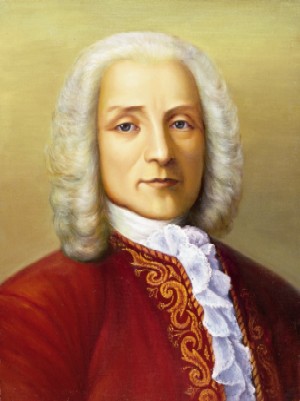
Domenico Scarlatti - Harpsichord Virtuoso


Period: Baroque
Nationality: Italian
Born: October 26, 1685 A.D. in Naples, Italy.
Died:  July 23, 1757 A.D. in Madrid, Spain.
Parents: Alessandro Scarlatti and Antonia Anzalone.
Contemporaries: Johann Sebastian Bach, Arcangelo Corelli, George Friedrich Handel. 
Specialist Genres: Harpsichord Sonatas
Major Works: 550 harpsichord sonatas, Stabat Mater a Dieci Voci e Basso Continuo, cantatas, oratorio, and operas.

            On October 26, 1685, in the city of Naples where classical music was a big deal, the Scarlatti family had their sixth child, it was a son! Mr. Scarlatti named his son Giuseppe Domenico; and just like his father and many other family members, Domenico would one day become an incredible musician. 

                It is a little bit of a mystery how Domenico started learning music. Some people believe that he learned from his father, others say that he learned from his uncles, but there is not much that we can go on. However, we do know that Domenico heard lots of great music, since lots of musicians passed through Naples.

           On September 13, 1701 at the age of 16, Domenico was appointed organist and composer of the Naples royal chapel, the same place that his father was maestro. A year later, Domenico and his father left for Florence where it is possible that they met the man that invented the first piano, Bartolomeo Cristofori. I say possible, because we do not know for sure, since neither Domenico nor Cristofori left us a diary or anything else of the sort.

            Domenico started working for Maria Casimira, the exiled Polish queen, that lived in Rome. Once Domenico started working for Casimira, he was given the opportunity to write at least one cantata, one oratorio and seven operas. Domenico also got to meet other cool composers, like Arcangelo Corelli, George Friedrich Handel, and Thomas Roseingrave. Scarlatti and Handel challenged each other to see who was more talented at the organ and harpsichord. Who do you think won? They both did! Handel was better on the organ and Scarlatti was better on the harpsichord. Scarlatti kept practicing and perfecting himself until he was one of the best  harpsichordists in all of Italy.


             Years pass by and Scarlatii wrote more music, played more music, and traveled around a little bit. It is in 1728 that Domenico Scarlatti did something that he never did before, something very beautiful, fun, and serious at the same time: he got married! 

         Scarlatti was a composer that pushed himself to be as creative as possible, from making the harpsichord to sound like the guitars he heard in Spain to making sure that his music had surprises for whoever approached it. Some people say that his music was witty and even sinister. Do not ever be content with playing your pieces of music one way, always push yourself to play it in the most creative way possible!

            Domenico married Maria Catarina Gentili and they had five children together. Life was good, Domenico is married, has children and he gets to teach King John V's talented daughter  the Infanta Maria Barbara, and King John's younger brother Don Antonio. It was in the years of teaching the Infanta Maria Barbara that Scarlatti wrote some of his most significant and exciting pieces, 500 sonatas for the harpsichord. Scarlatti eventually traveled all the way to Madrid, Spain, where he finished his life and died on July 23, 1757. 


Monday, July 8, 2013

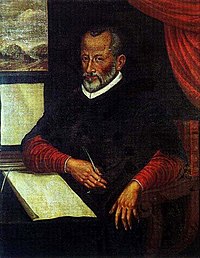
Giovanni Pierluigi da Palestrina


Historical Period: Renaissance
Nationality: Italian
Born: Palestrina, Italy; 3 February 1525 A.D.
Died: Rome, Italy; 2 February 1594 A.D.
Family: Lucrezia and three sons: Rudolfo, Angelo, Iginio.
Specialist Genres: Church (sacred) music.
Major Works: 140 madrigals, 104 masses,
and 250 motets.

     It is the 1500s, when Leonardo Da Vinici created his masterworks, William Shakespeare composed his plays and sonnets, Italy and France fought one another, the Ottomans fought the Shiites, and Martin Luther wrote his famous 95 Theses to bring change in the Catholic Church, music was flourishing.  Around this time, sacred music, music written to be sung in church services, was written mostly by composers in France, Spain and Portugal (the Low Countries). Giovanni Pierluigi from Palestrina, Italy, started composing sacred music and was one of the first from his country to be influential in sacred music. He became so famous that people just call him Palestrina, by the name of the city he was from. His music was very polyphonic, which means that the song has many melodies  going at the same time and harmonize beautifully. Giovanni was very disciplined to keep to his own style, which is described as smooth, flowing and leads you to spend time thinking about the words of the song. It is incredible to think what a man from a small town can do when he works hard and does not give up!


         Giovanni Pierluigi was born on February 3rd, 1525 A.D.,  but there is not much about his early years. We know that his family moved to Rome, Italy in 1537 A.D.  and while there the choirmaster of Santa Maria Maggiore church heard him singing one day, the choirmaster liked it so much that he started giving Giovanni musical training. As Palestrina grew up, he learned to play the organ and was given a job as the organist at St. Agapito and also taught music lessons from 1544-1551. He then became the maestro di cappella in St. Peter's papal choir. This choir sang at the church where the Pope of the Catholic church would go. 
      In 1547, Palestrina had the great joy of marrying  Lucrezia Gori. They had three sons together, Angelo, Rudolfo and Iginio. There was a lot of happiness in the family when the children were born and Giovanni kept writing music.
      Giovanni published his first book of Masses before he was 30 years old. Masses are songs for the church service of the Catholic Church. When Pope Julius III heard these beautiful songs that Giovanni composed he was so impressed that he offered him the position of music director of the Julian Chapel. These songs that he wrote for the church services were sung by a men's choir with no instruments, which is very different from a lot of the music that we listen to today. 
      Giovanni was the director of music at other churches as well and we know that he was picky about the kind of job he worked. In 1568, Giovanni was offered the job as choirmaster for the imperial court in Vienna, so he would be working for the emperor. But Giovanni did not take the job because he did not like what the job was all about. He wrote many other pieces of music, such as motets, hymns, offerories, and lamentations. 
      Among all the success and happiness, Palestrina also experienced great loss when his wife and two of his sons died in the Plague by 1580. Iginio, his son, was the only one in the family to survive the Plague with Palestrina. It was because of these painful experiences that Giovanni considered becoming a priest of the church. A priest is a man that gives up his life to serve in the Catholic church, so does not own anything and will not get married because he has dedicated himself completely for Jesus Christ. But Palestrina did not do it, in 1581 he married a widow, a woman whose husband died. 
      Palestrina left this earth leaving behind a lasting influence on the development of church music, his work being seen as the culmination of Renaissance polyphony. What are you working on?