Your child's recital is tomorrow and you are unsure what to do. Maybe you can say that you are anxious because you do not want your child to mess up. Here are some quick tips that will help in preparation for the recital:
1. Pack. Check your bag and instrument
twice the night before and the day of the recital; you want to make sure
you have everything you need.
2. Early is on time. Get there 20-30 minutes early to get settled in, unpack, use the bathroom, warm-up, and not feel rushed.
3. Encourage.
Tell your child how good they are doing, reassure them that you enjoy
their music, and give them some specific compliments. This is not the
time to ask them, "Are you ready?" or "Did you practice enough?" or "Are
you nervous?" These kinds of questions will just raise the anxiety
level of your child and will not help anyone perform their best. They
are already nervous, so be there for them to bolster their confidence.
4. Remember. Talk through what to do when it's their turn to perform, like you discussed in lessons with your teacher.
5. Enjoy. Look
forward to the recital, enjoy yourself, socialize, video record what
your child is playing, bring snacks for the reception and enjoy them
with people. Your attitude will affect others around you, so make the
most of the recital.
Are these tips helpful? What have you been doing to make recitals a good experience?
Showing posts with label private lessons. Show all posts
Showing posts with label private lessons. Show all posts
Friday, November 14, 2014

Monday, June 30, 2014
The Summer Practice Challenge!
Every summer, my students are encouraged to go for The Summer Practice Challenge. Why? I started it a few summers ago because I thought it would be a fun way for students to get a prize and it would encourage them to avoid being lazy with their instrument. Being lazy in the summer time is very tempting with no school, hot weather and other fun activities that they are doing. But The Summer Practice Challenge has been a success, more and more parents are telling me how it's motivating their children.
How does it work? The student needs to be able to play everything I give them on their practice chart 20 days in a row. If they do not skip a day and get 20 days they get their prize, or they may go for 40 days to get a bigger prize, or if they get 40 days, they can go for 60 days for the biggest prize!
The Good news: 1. the prize is something the student likes, 2. the student may start the challenge any time they want before the 1st day of school, and 3. they may re-start the challenge as many times as they want. As you can see the point is to motivate the student to keep trying.
The Benefits:
1. Motivates students to practice (they want to push for the prize).
2. Challenges the student's and the parent’s integrity to be honest (will they cheat?).
3. Teaches the student consistency and discipline to practice even when you do not feel like it.
4. It teaches students to set goals and have fun at the same time.
5. The student will learn to take responsibility to complete his or her goal.
6. Parents will not have to push their child very hard to practice.
In the end it is the attitude of the teacher and the parent that will influence the student on how to approach The Summer Practice Challenge. Parents, out of good intentions, have pushed their child so hard that the student shuts down and they do not want to do the challenge. I encourage teachers and parents, to make this optional to their students as it will "put the ball in their court." You might be surprised what happens when you give them the responsibility. Let the challenge begin!
Thursday, June 19, 2014
Summer Lessons, the Best Time to Start or Keep On
If you are looking for a teacher or just want to try something out, take 2 free online lessons with me! And for those of you in the Louisville area, I teach at the Oldham County Arts Center and the University of Louisville Community Music Program. I teach the violin, viola, cello and piano. We can do Suzuki, fiddle, bluegrass, classical and/or church music. Send me an email at: privatelessonmatters@gmail.com for more info.
For those of you who have a teacher, here is what I recommend you keep in mind as you think it over:
1. Some teachers will be able to have lessons earlier in the day since there is no school, so just ask.
4. If you take lessons in the summer you will have a spot for sure in the Fall with your teacher.

Monday, June 16, 2014
Louisville Philharmonia Pops Concert!
On Thursday, 7:30 PM on June 26, 2014, at the Harvey Browne Presbyterian Church (311 Browns Lane in Louisville, Kentucky) the Louisville Philharmonia is putting on their annual Pops Concert!
Here are some of the pieces you can expect: Gershwin An American in Paris, Lloyd Webber/Custer The Phantom of the Opera, Anderson The Typewriter, Shore/Whitney Lord of the Rings, Gliere Russian Sailors' Dance, plus many other favorites! As usual, the cost is $0, unless you would like to donate. We usually fill the entire auditorium so make sure to get there around 7 p.m. so that you can get a good seat.
What a nice way to try something new and encourage your children in their musical endeavors, talk about a simple way to make practicing easier. Learn more about the orchestra here
Monday, June 9, 2014
Teaching Reflections: Unique Moments
Every profession, job, and career comes with good things and bad things. For many people in the United States it is easy to focus very much on the disadvantages, it is easy to complain, to be jealous, to just get through the day. Can you imagine how painful it is to go through life that way? We lose so much when we do that?
A little while ago I had the wonderful opportunity to play with one of my students at a private family occasion. The student and I played a song together. As I was there, I realized what rare privileges I have as a private music teacher. I get to see families have fun, celebrate and even grieve, all because of private music lessons. Who would have thought that teaching students can be more than a 30-minute lesson once a week? I am not sure how many other professions get a chance to experience these kinds of unique moments, but these kinds of moments in life encourage me and I praise God for them.
These kinds of unique moments have also helped me remember that as much as musical excellence is important, sharing life with people is even more important. This is especially important to remember in the American society that is always "on the go" with no time to breathe. The priority of the relationship between the parent and child with the teacher is one aspect of the Suzuki method that I find so refreshing. At times I get the impression that people think of teachers as waiters at the restaurant just giving people what they order. But how much better to see a teacher, a student and their parents as more than just clients who give me something.
Prioritizing relationships with people makes it possible to have good unique moments. Are you looking for these moments? What do you live for? So, what are some great moments that you have experienced lately?
Thursday, June 6, 2013
Bastien Piano Basics Level 1, No. 3: Sleepy John
Focus Points:
- Make sure you are in C position with both hands: right hand thumb on C and left hand pinky on C.
- This is the first time in the book that the left hand starts
- At the end of the piece, in the last two measures, the right and left hand alternate. Make sure that you do not skip the double C in the right hand.
- Try playing every note in the song with "pepperoni pizza" like in the finger concerto.
- Play the p (piano) really soft and the f (forte) really strong to make a dramatic difference.
Monday, June 3, 2013
What Violin Size Should I Play on?
It is pretty easy to determine what size Violin you or your child should play on:
1. Scroll Grab: Can you reach around the scroll (top) of the violin with a slightly bent elbow.
2. Fingers Painfree: Can you put all your fingers down on the G string able to play the note D easily and painfree? Play each finger to see if it is comfortable and in tune.
It is easy to give in to the desire for a parent or a violinist to want to get to the bigger size instrument because of the potential sound. The problem is that you are not meant to grow into the vionlin like we do with shoes.
The disadvantages outweigh any advantage of playing a size too big. Here are some losses of playing on an instrument that is big:
1. It will be more difficult to play in tune.
2. The fingers may hurt when stretching to reach the correct position for the note.
3. Bad playing position: posture, violin position, bow hand.
4. The tone will come out more rough, crunchy or squeaky because of the struggle to get the notes.
Check out what another violin teacher's explanation on the size of the violin.
Copyright © 2013 Mircea & Daniyela Ionescu. All rights reserved.
Wednesday, May 29, 2013
Bastien Piano Basics Level 1, No. 1: March On
Focus Points:
- Put hands in C position. Right hand thumb on C and Left hand pinky on a lower C.
- The right hand starts, because the notes are written on the top staff
- Remember that the white notes, called half notes, need to be held down for two beats twice as long as the black notes, called quarter notes.
- After playing each hand, play both hands
- Play the song faster
Tuesday, May 28, 2013
Bastien Piano Basics Level 1: It's Winter
Focus Points:
- Put hands in C position
- Make sure that you put both 3rd fingers on Eb, the black key, before you start
- Practice each hand separately slow, medium and fast
- Play both hands slow, medium, fast
Thursday, May 23, 2013
Wednesday, May 15, 2013
Sunday, May 12, 2013
Thursday, May 9, 2013
We're Gone on Vacation Over the Summer, Should My Child Take Lessons Anyway?
Taking lessons over the summer is one of best things you can do for yourself and your child. Many students forget more than half of what they learn in school that year over the summer; the same goes for music skills, sports skills, you name it.
So do not stop lessons over the summer, keep it going even if there is vacations and camps somewhere in there. Most teachers are flexible during the summer because they are gone at times as well. If your teacher does not teach during the summers, ask for a recommendation on someone in the area that you can study until the Fall.
Still not convinced, here are some more things to consider:
1. Progress: If you stop lessons over the summer, some students and parents come back with bad habits formed and songs forgotten. Some people just quit their instrument instead of coming back.You do not want to lose the investment you made and pay extra to make-up for the loss. For some students it takes a few weeks or even months to get back to where they were at the beginning of the summer. If you keep up with lessons over the summer, you will continue to move forward with musical skills, motor skill development, consistency, time management, etc. You will not fall behind, which will keep you encouraged when other subjects seem to be lagging at the beginning of the school year.
2. Opportunities: Throughout the summer, there are great camps you can participate in. At camps, you can meet parents and other students, which will motivate everyone to enjoy the music they learned, learn new music, be challenged to play better, and more (more information about camps here).
3. Teacher Availability: The summer brings new students for some teachers, which may cause you to lose your slot or even not be able to fit in the Fall schedule. Along the same lines, some parents want to switch teachers and use the "summer break" line as a way to evade the issue. I want to encourage you to use this kind of situation as an opportunity in character development. Your character is on display to your child and others as you deal with harder situations. You can lose more than you know when you just make up excuses or evade issues. Face hard situations with respect and humility, and good things happen in your family.
Summers are wonderful opportunities to invest in the growth of the family. It is easy to just drop everything, but if you take advantage of what school breaks offer, you will win out in the end!
Monday, April 29, 2013
Picking the Right Instrument to Learn
You like so many things about music and you have seen so many cool things played by professionals, but you do not know which instrument to choose for yourself (or your child). This is actually good news!
Here are some things that will help you make a decision:
1. Size. Some instruments these days come in different sizes, like the violin and the guitar, so these instruments will work for ages as young as four 3 years old. Other instruments require that you wait until you are in middle school, like the trumpet.
2. Free Trial Lesson. If there is an instrument that you or your child have some interest in, contact a music academy, a music store or an online teacher (I am available for instance) where they offer lessons to see if you can come in and give an instrument a try (more about this here).
3. Band & Orchestra. For students all the way up through college there is the possibility of taking a class to learn an instrument in the United States of America. One thing that will help you here is to look for the instruments that are few in number because you will get more attention and it will open up opportunities towards learning other instruments as you progress. For example, you may start out with viola in the orchestra, but then make the move towards the violin since they are so similar. Whatever instrument you learn will give you skills to learn other instruments as well.
Parents and students, it is important to remember that whether it's the piano, the cello, or the saxophone, you (and your child) will gain a musical education, some discipline, and it can be enjoyable. I have noticed parents being very concerned when their child does not like a certain instrument. Sometimes students are looking for a certain feeling towards an instrument. Feelings come and go, so if you hold on and keep playing your instrument, over time your affection for the music you play will transcend the up-and-down feelings that all musicians experience.
If the reason you want your child to really like the instrument is because you think that will keep them motivated to practice, let me assure you that the hype of something new is very transitory. It is more important that you and your child value and enjoy the learning experience, that you learn to practice even when the feelings are not there, and find ways to get inspired (more on inspiring to practice here). So, definitely take in consideration that you (or your child) likes the instrument, but remember that we all grow to love things as well.
I admire the approach that some Asian parents take towards music lessons. They see private lessons as a part of the overall education of their children, so viola lessons are next to Math and Science.
I encourage you consider music lessons as building you and your family into a well-rounded people, try a free trial lesson, find a good teacher (more about this here) and give it a year!
More information on picking out an instrument here
Thursday, April 4, 2013
Christoph Gluck: Reformed & Simple Opera
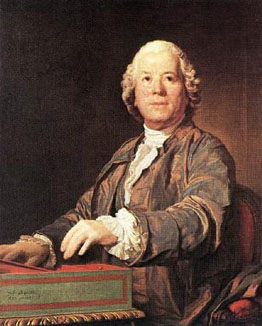
Christoph Willibald Gluck became a reformer of
opera in what is now called the early classical period.
Historical Period: Classical
Nationality: Germany
Born: 2 July, 1714; Erasbach, Germany
Died: 15 Nov, 1787; Vienna, Austria
Cause of death: Stroke
Father: Alexander Gluck
Wife: Marianne Pergin
Daughter: Marianne (his niece, adopted)
Contemporaries: J.S. Bach, G.F. Handel
What's Happening in History? It is the 1700's; the First Copyright Act has been passed in Britain (1709); in North America there is fighting with the Tuscarora Indians; Jean Jacques Rousseau, the French philosopher, dies (1712); the same year that the Shawnee Indians established themselves in Ohio. The United States of America is not a country yet, just colonies (more world history during the 1700's here).
Beginning. It was around this time that Christoph Gluck was born to Alexander and Marianne Gluck on July 2, 1714 in the country of Germany. Alexander Gluck worked for Prince Lobkowitz as a gamekeeper to provide for the family. Although the name may make one think that it has something to do with sports, a gamekeeper took care of animals. Marianne, his mother, took care of the house and helped Alexander. Alexander's job for Prince Lobkowitz made it possible for Christoph to get a good education at the Jesuit School of Kommotau from twelve to eighteen years of age; a Jesuit is a kind of Catholic priest. Not much has changed today, parents are still responsible to make sure their children are in a good school. This is where Christoph received music lessons alongside his general education. At eighteen years of age, Christoph went to Prague, Austria, to continue studying music with Czernohorsky. I wonder if Christoph called his teacher Mr. Czerno or Mr. Hors for fun.
Working. As Christoph was studying in Prague, he had to work to pay for food, clothes, a place to live, and other necessities. At first, Christoph worked playing the violin at county fairs and dances. After a while, with the help of Prince Lobkowitz, Christoph was able to meet some richer families, which in turn helped him get a better job teaching music. It is good to ask others for help. In 1736, Christoph went to work in the city of Vienna and then moved to Milan, Italy to study with a famous teacher named Giovanni Battista San Martini. It was around this time, 1741-1745, that Gluck started writing operas, and Italians loved going to watch operas. Operas are like movies in that there are actors, cool costumes, and there is a story being told. But, operas also have something that movies do not have: singing! People liked Gluck's operas so much that he was invited to London to write more operas there; the first one is called La Caduta dei giganti. Gluck not only wrote operas, he also performed on musical glasses, which is kind of interesting! It was also in London that Christoph became friends with George Friedrich Handel, another famous composer. Gluck admired Handel so much that he kept a picture of Handel in his bedroom to be inspired by it.
Reforming. In 1762, with the help and encouragement of his friend, Raniero da Calzabigi, Christoph made some big changes to the way opera was performed. It was his opera Orfeo ed Euridice that showed off these changes. The overture started the opera to introduce the drama and mood; instead of having singers show off their singing skills, the opera now told the story simply. Poetry and music were now bound together to show the emotion of the story and dramatic continuity.
Christoph Gluck was the opera man, that's what he focused on in his life and he did not give up. Gluck's perseverance and openness made a big difference in the musical world. Do not give up on your music, keep pushing yourself!
Wednesday, March 27, 2013
How Much and How Often Should I Practice?
Good question. This
is a question that students, parents and teachers struggle to answer.
And, of course, there are many stances on this issue, some of these stances make sense and other do not make sense.
I will not evaluate other stances here, but I will give you mine. Here is the way that I think about it: age, level, goals. I use these three categories to decide how long and how often someone needs to practice. For
instance, a five year old (age) that’s just started (level) and whose parents
want him to get a good well-rounded education (goals) will practice differently than a seventeen-year old that is in the top orchestra at school that’s
interested to keep it as an extra-curricular activity while in college.
Whatever your age, level
and goals, it is best to strive for consistency and realistic goals in
practicing your music. Realistic goals are crucial because many people make
drastic changes in their practicing that do not last long, so they get discouraged, feel like failures
and practice less or give up. Therefore, it is better to start where you are and take one
step up from there.
So here are some general
guidelines:
1. Days per Week: No
matter the age, level and goals start with practicing 3 days a week. Commit to
that and you if you get some weeks where you practice a day or two more, that’s
good! After a month, you are ready to push for 4 days and so forth.
2. Minutes per Day: Start
out with 10 – 15 minutes at a time.
Cover all the material and exercises that your teacher assigned to
you. Get consistent at this for a month,
then push for 20 minutes. If your son or
daughter is 4-8 years of age, you may need to patient because 10-15 minutes per
day maybe the most they can do with you for a few months. Eventually, you will be at a level that will
require 30 minutes up to 1. 5 hours. This
of course is after a few years of lessons and practicing consistently less
time.
As
you are working on your consistency and regularity of practice, remember that
the quality of time (efficiency, concentration, and expressiveness) is just as
important as the quantity of time that you practice. Always seek
to enjoy your practicing, it’s time well spent!
Copyright © 2013 Mircea & Daniyela Ionescu. All rights reserved.
Tuesday, March 26, 2013
Inspiring to Practice
So you or your child have started lessons but the excitement of the "new" is wearing off, just like new toys and video games at Christmas. What do you do to keep practicing going?
An Ongoing Journey. So let me just tell you upfront that there is no quick solution, no special words or gimmicks that will cause unceasing inspiration to practice an instrument. Learning how to practice and learning to practice consistently is an ongoing journey. So enjoy the journey and try different strategies to keep the journey going.
For those of you that are parents, you want your children to grow into mature adults, to have a disposition of the heart that knows what is important in life, keep doing these valuable things consistently, and enjoy them at the same time. Recognizing and treasuring the great things in life is also what you want for yourself. Part of this growth occurs when you and your family seek ways to be inspired, build discipline and move forward. Remember that the goal in music lessons is to gain a well-rounded life, which includes enjoying to play the instrument with feeling and excellence, but it is not just music lessons.
What I have noticed is that some students struggle with practicing because of the values they have adopted. They are used to immediate gratification, whether it's the candy, the video games, the internet time they want, they get it quickly. They are used to quick results and so are you. This is not how it works with learning an instrument, or even a good career. The lessons open you and your child up to the opportunity to grow in this area of working hard and awaiting the pay off, lots of good conversations on the importance of hard work, patience and perseverance, etc.
Alongside the conversations, here are some things to keep the inspiration going:
Music in the Air. With all the wonderful technology that is around you can find recordings on the instrument that you or your child is learning. It is also an opportunity to go to the library, where you can look at CD's and pick one out. Have music playing around often.
Home Recitals. Pick a day out of the week to perform for family and friends whatever pieces you know. Even if it's only one piece, it will motivate you and/or your child to keep going.
Go to Concerts. There are lots of free concerts in town; check out the high schools and colleges. There is probably a youth orchestra that you can go watch. Get out of the house and enjoy!
Group Playing. Invite friends over to play the pieces that you know together. There are group classes available if you look around. The youth orchestra usually offers group classes and/or ensemble playing for various levels of experience. Playing with others pushes you to keep going.
What ideas have you learned and come up with to keep you and your child motivated to keep playing? What are your struggles to practicing at home?
Copyright © 2013 Mircea & Daniyela Ionescu. All rights reserved.
Monday, March 25, 2013
Don't Got Money For Lessons
With the
economic problems in the last few years many of us have had to give up some
things, cut back on luxuries and prioritize our spending. Now you have heard about private lessons –
tutoring, but you are not sure you can afford it. You probably can.
Prioritzing. Many of us are not very disciplined about our finances, we live to spend. So we need to take time to prioritize things in your life. After necessities are settled (food, shelter, transportation), we need to consider: Where do private lessons fall? Are they crucial to you or your child’s overall education? Are music lessons another hobby, like soccer?
The cost for lessons can run from $15-30 per thirty-minute lesson every week. For some people this is the cost of eating out one night a week. So you can think of it as giving up one trip to the restaurant per week.
However you think about it, husbands and wives need to talk through these important issues so that they can discern whether or not to proceed with private lessons. It is a team effort planning out education.
Are the benefits of private lessons-tutoring worth the cost that you will incur? Yes! Whether they are cello lessons, ACT and SAT prep, helping yourself become more well-rounded, or helping your child bolster their math skills, it is worth it. Private lessons always affect other areas of life, like concentration, self-discipline, confidence, comprehension and verbal skills.
The going rate is about these days is about $20-25 for 30 minutes a week, which means that if you cut out one trip per week to a restaurant, the movie theaters, or other forms of entertainment, you can take private lessons! Try them out for a year and you will see that it's worth the investment.
How have you dealt with the financial part of private lessons?
Copyright © 2013 Mircea & Daniyela Ionescu. All rights reserved.
Thursday, March 21, 2013
Free Trial Lesson
Take advantage of it!
Here's what I typically do in a free trial lesson:
1. Introductions. I tell a little bit about my background, why I teach lessons and then I ask the parent about his or her background, and how they became interested in lessons. Then, I ask the student about their experience with the subject or instrument.
2. Go over my teaching approach and policies with the parent and student. It is important to talk through all of this, so that there is no misunderstanding. That sounds good to you, but maybe you are wondering why have the student there for this part? The student needs to hear about my expectations and it gives us the opportunity to interact.
3. I work with the student. Now it's time for some action, we work on something together. If they have never played, let's say the violin, then I will teach the student the parts of the violin and bow, how to care for the instrument, playing and rest position, how to hold the bow, play some rhythms on the open strings, and some educational games to put in practice what has been learned.
4. Demonstration. I usually finish demonstrating a piece of music that the student will learn in the course of their study with me.
It does not have to be very complicated and the free lesson only gives you a glimpse, so there's no need to have high expectations. Everyone tries to make good first impressions, we all have good days and bad days, it's part of life. Take your time and visit a few teachers, so that you can compare and contrast.
Copyright © 2013 Mircea & Daniyela Ionescu. All rights reserved.
Wednesday, March 20, 2013
The Right Teacher for Your Child
So here are some things to consider when choosing a teacher or tutor:
1. Goals. What exactly do you want to get out of these lessons? Remember, that a teacher cannot replace you, he or she cannot take over a parent's responsibility. A teacher-tutor can partner with you to raise your child, influencing, inspiring, bringing resources to both you and your child, but it's on you. What I mean is that dad and mom are the most important and influential people in the life of their child, they need to embrace that role with their whole hearts and minds. A child needs both, dad and mom, to raise him or her, so make that a priority no matter what kind of lessons-tutoring you are looking for. Tutoring-private lessons are not quick fixes, they are another form of investment in your child's education.
2. Time. A lot of people rush to just find someone quickly. This usually leads to a loss of time, money and not much grown in the child. It's a loose-loose situation. Be patient and you will win in the end.
3. Looking. You can contact universities in your area, look online for academies or centers that offer these services. These places may have the kind of teaching that will beneficial to your child. Another place to consider is online lessons. It's new, but it can be done.
4. Interviewing. Ask the potential teacher for a meet-and-greet so that you find out more about him or her.
- Credentials. Where did they go to school? Do they have video samples of their teaching? Why do they teach lessons? You are looking for someone that has some training, but that does not guarantee anything. You will want to hear them play for you or if it is math, to show you some of their work. Also ask about video clips of them teaching. Ask them to sit in on a lesson to see how they teach. You are looking for training and results.
- Administrative. Ask about make-ups, lateness, what if they cancel or they are late?
- Scheduling. What time and day of the week will you meet? How long are the lessons? why?
- Teaching approach. What material-methods do they use? What goals the teacher has for students? How do they handle discipline? What expectations do they have of parents?
Now it's your turn: What has helped you find a good teacher to work with you and your child?
Copyright © 2013 Mircea & Daniyela Ionescu. All rights reserved.
Subscribe to:
Posts (Atom)